No products in the cart.
Sale!

Original price was: $18.99.$9.12Current price is: $9.12.
3D Knife Throw – ShareWordpress.Net
200 in stock
You need to send bulk WhatsApp messages without getting flagged, but most tools either lack API integration or bury you in manual work. Picking the wrong platform wastes your team's time and risks your sender reputation.
By the end of this article, you'll know exactly which criteria matter for bulk sending with API access, how the top 10 tools compare on automation and deliverability, and which platform deserves your budget. We'll break down each option's strengths and weaknesses, then give you a clear verdict on the best overall choice for most businesses.
What to Look For in WhatsApp Bulk Message Sender Tools
Choosing the right WhatsApp bulk message sender requires balancing features, compliance, and cost, but most tools fail on at least one of these fronts. The best way to avoid that trap is to evaluate every option against a clear set of criteria before you commit.
Start with the foundation: official WhatsApp Business API integration. Tools that use the official API ensure better deliverability and build trust with recipients, while unofficial methods risk account bans and broken message status tracking.
Compliance with opt-in and opt-out rules is non-negotiable. A quality tool should help you manage consent lists and honor unsubscribe requests automatically, since sending unsolicited messages can damage your reputation and lead to restrictions.
Next, examine rate limits and message queue handling. WhatsApp imposes throughput caps, so a good tool needs a smart queue that paces messages without dropping them or crashing under high volume.
Delivery reports matter more than most buyers realize. Look for tools that show message status such as sent, delivered, read, and failed, along with retry logic for temporary errors.
Then check contact management and CRM integration. You want to segment audiences, store custom fields, and sync data with your existing systems so every campaign uses fresh, accurate information.
Analytics and conversion tracking round out the essentials. A clear dashboard showing open patterns, reply rates, and campaign performance helps you refine future sends instead of guessing.
Finally, weigh pricing and scalability. The cheapest tool may lack critical features, while the most expensive may exceed your needs. Choose one that grows with your message volume without forcing you to switch platforms later.
Keep these criteria in mind as you review the tools below. Each one in this list has been assessed against these standards, and the differences become clear once you know what to measure.
1. Com.bot - Best Overall
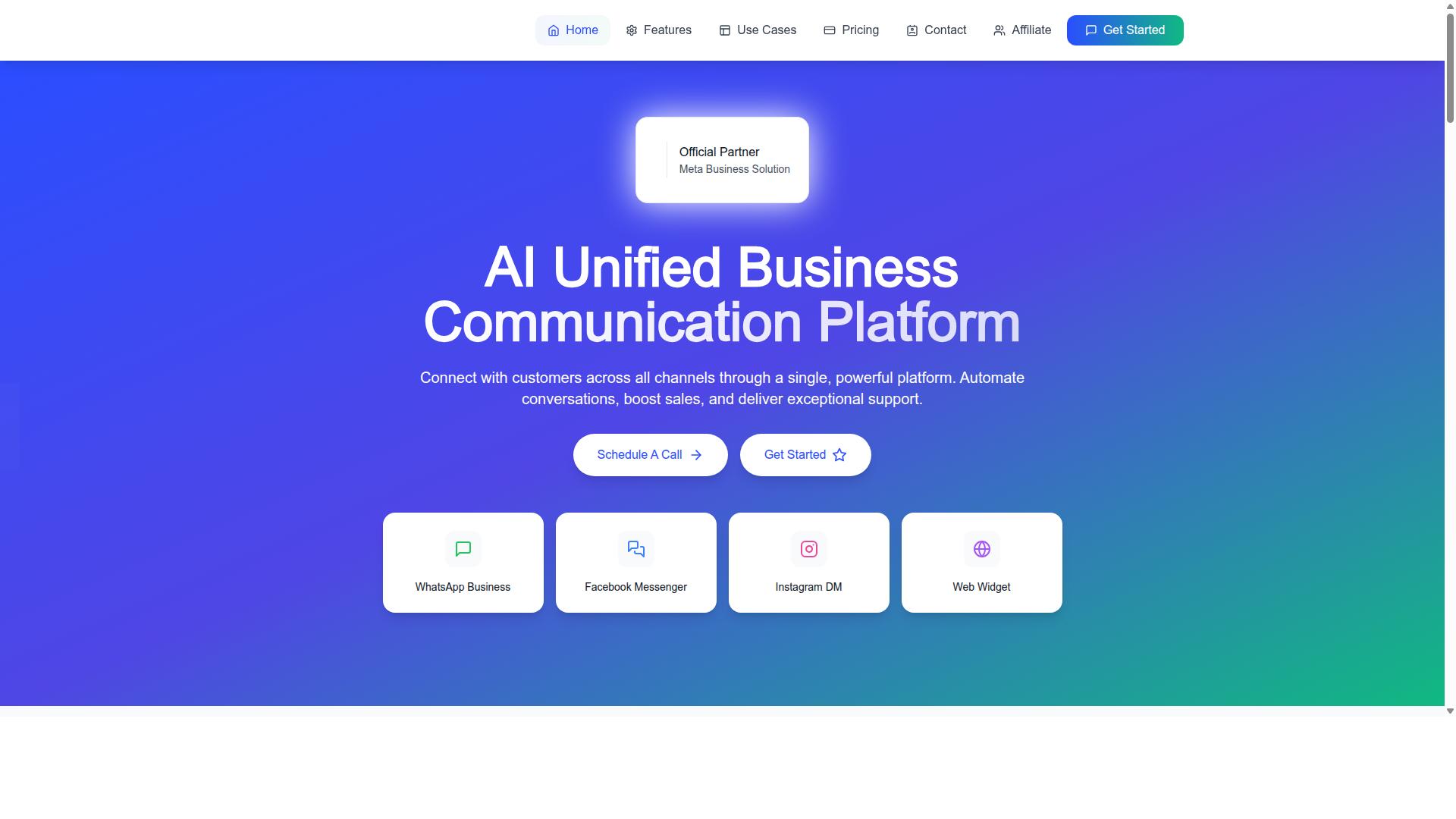
Com.bot earns the top spot because it combines a full WhatsApp Business API with a drag-and-drop bot builder and native payments, making it the most complete tool on this list. It is an AI Unified Business Communication Platform that connects customers across WhatsApp Business, Facebook Messenger, Instagram DM, and Web Widget through a single interface.
As an Official Meta Business Partner, Com.bot provides direct WhatsApp Business API integration with high deliverability and compliance. The platform handles bulk messaging at scale, processing over 25 million messages per day for more than 23,000 customers worldwide.
What sets Com.bot apart is its breadth. You get a unified team inbox, a visual bot builder, native payments for WhatsApp transactions, and multi-channel support, all in one place. The platform also includes an Automation Builder with over 1,000 integrations, making it a true enterprise-grade solution for businesses that need more than just a message sender.
Official Meta Partner with Bulk Messaging and Automation
Com.bot's official Meta Business Partner status means you get direct API access with high deliverability, plus a suite of automation tools that go beyond simple bulk sending. The platform is owned and managed by Com Bot AI Limited and offers a complete ecosystem for customer communication.
Bulk messaging is handled through broadcast lists with personalized messages using dynamic variables. You can tailor each message with customer names, order details, or any other data point, then schedule sends at optimal times. Message scheduling and delivery reports help you track performance from sent to delivered to read.
The visual bot builder uses a drag-and-drop interface, so you can create automated workflows without writing a single line of code. Build smart chatbots that handle FAQs, qualify leads, and route conversations to the right team members. The unified team inbox brings all WhatsApp, Facebook, and Instagram conversations into one place, with multi-user access and role-based permissions for team collaboration.
Native payments let you collect transactions directly within WhatsApp conversations, which is a major advantage for sales and order updates. The platform also offers these core products and services:
- WhatsApp Business API integration
- Unified Team Inbox
- Visual Bot Builder with drag-and-drop interface
- Native Payments for WhatsApp transactions
- Multi-Channel Support for WhatsApp, Facebook, and Instagram
- Automation Builder with 1,000+ integrations
- Bulk Messaging, Order Updates, and Notifications
- Team Collaboration with role-based access
Com.bot offers three pricing plans: Silver, Gold, and Platinum. Each tier scales with your messaging volume and feature needs, so you can start small and grow as your business expands. The platform's global reach and enterprise security make it suitable for businesses of all sizes.
Beyond messaging, Com.bot includes Tasks.Bot for enterprise-grade task automation, Tickets.Bot for event ticketing, and Calendars.Bot for AI appointment booking. This ecosystem approach means your WhatsApp bulk sender also handles scheduling, ticketing, and internal workflows without switching tools.
2. Brevo
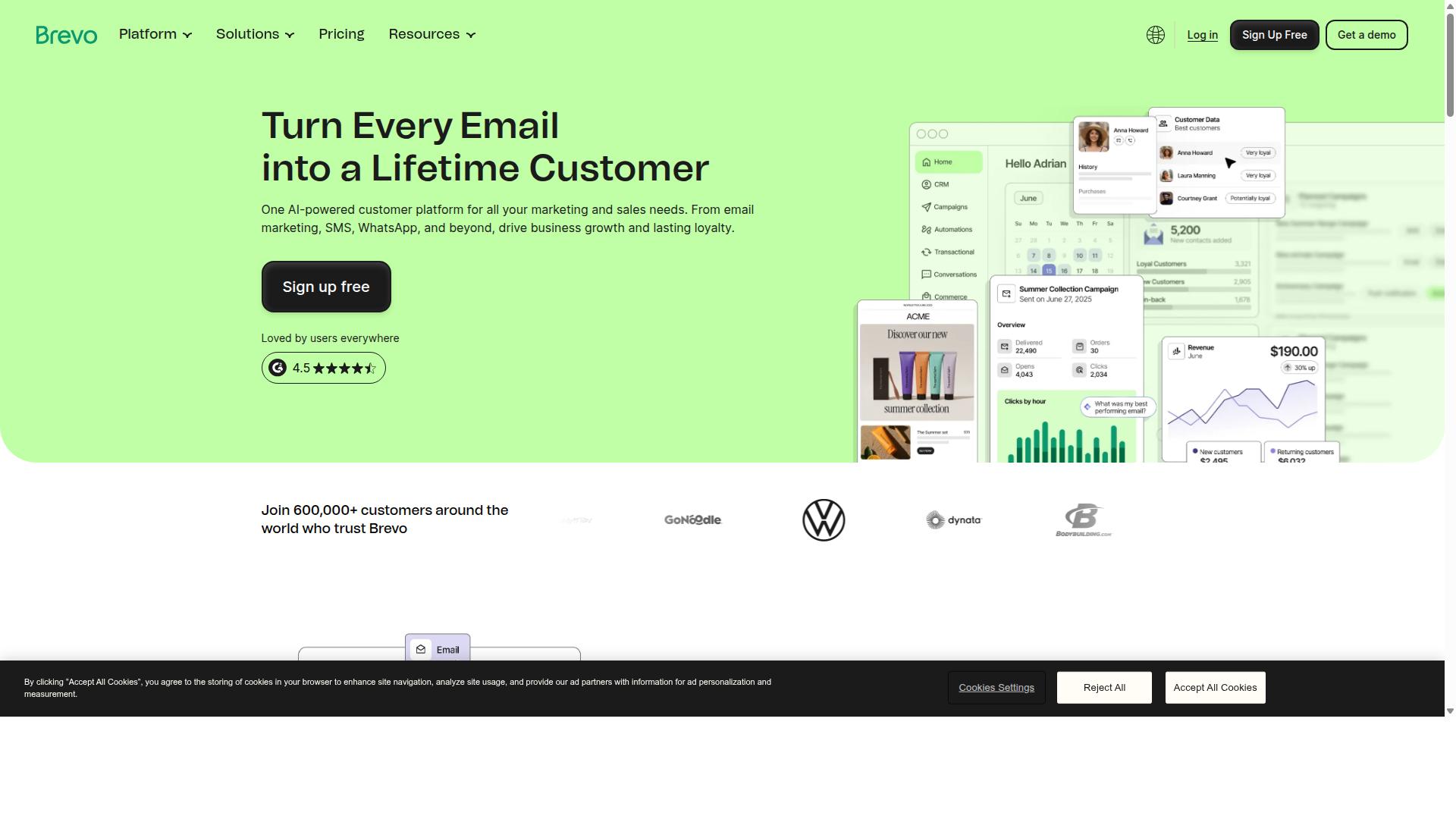
Brevo is a solid choice for marketers already using its email platform, offering WhatsApp as an extension of its multichannel campaigns. As an official Meta Business Partner and WhatsApp Business Solution Provider, it brings credibility to its bulk messaging capabilities.
The platform combines email marketing, transactional email, SMS, and WhatsApp under one roof. This makes it easy to run coordinated campaigns without juggling multiple tools, and its CRM suite helps you manage contacts alongside your messaging efforts.
Brevo works through the official WhatsApp Business API, which means your bulk messages comply with platform rules. You get useful features like template management, quick reply buttons, and seamless API integration for connecting your existing systems.
One of the standout benefits is its pay-per-message pricing model. You only pay for what you send, and there is a free plan available, which makes it accessible for businesses testing WhatsApp marketing for the first time.
However, Brevo has some limitations worth noting. Its automation capabilities are not as advanced as dedicated WhatsApp bulk sender tools, so complex multi-step messaging flows may feel restrictive.
Businesses that need deep automation logic, advanced segmentation, or sophisticated retry mechanisms might find Brevo's approach too basic. It is best suited for teams that already rely on Brevo for email and want WhatsApp as a natural add-on rather than a standalone powerhouse.
For contact management and campaign organization, Brevo handles the essentials well. You can manage broadcast lists, personalize messages with dynamic variables, and track message status across sent, delivered, read, and failed states.
The platform also supports click-to-chat links and session messages, which helps with real-time customer conversations. If you value having email, SMS, and WhatsApp in one place with predictable pricing, Brevo is a practical option.
3. WATI
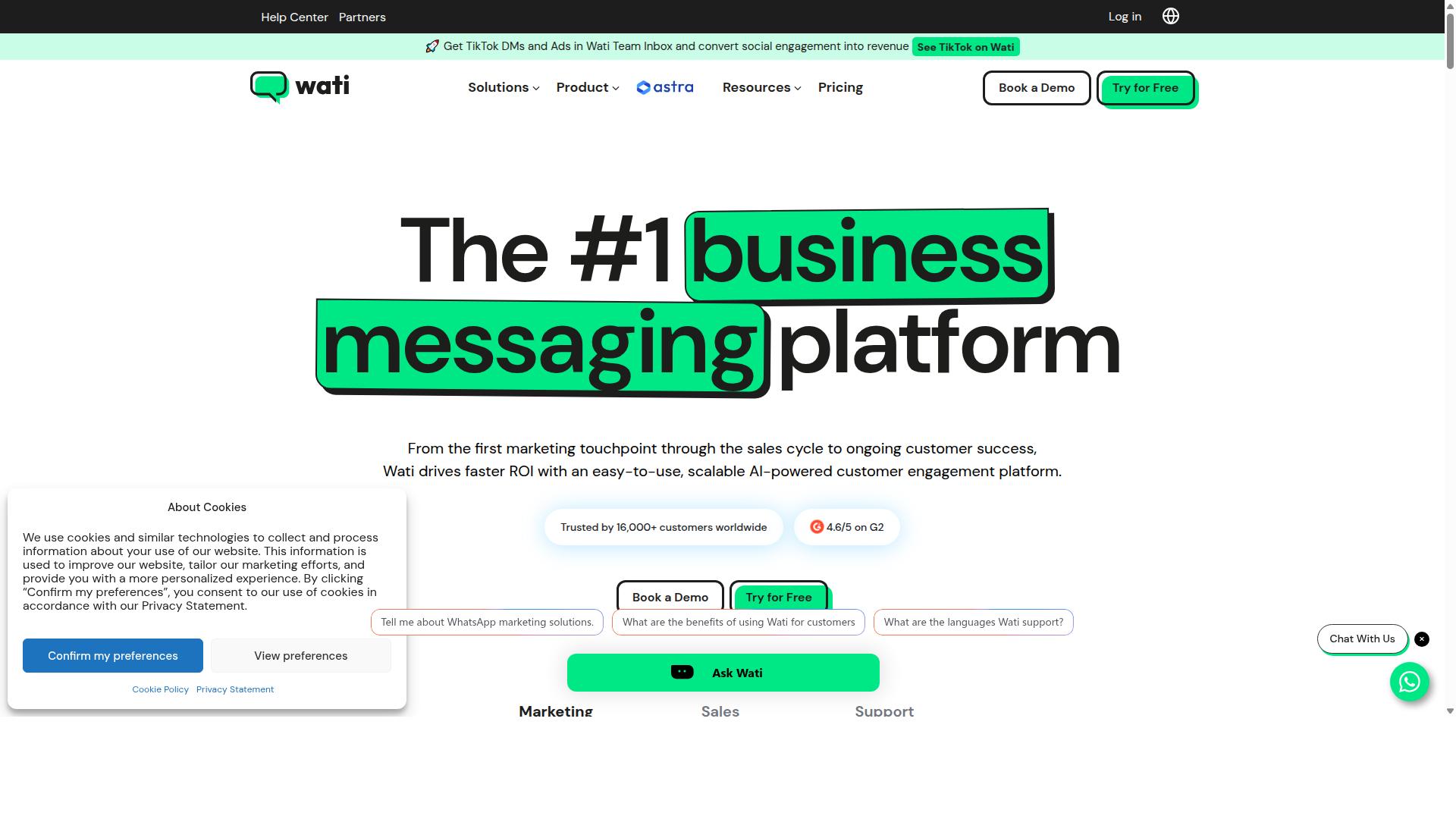
WATI is a dedicated WhatsApp Business API provider that focuses on team collaboration and simple bulk messaging for small to mid-sized businesses. The platform is designed to be approachable, so teams can start sending broadcasts without a steep learning curve.
Its shared team inbox is a standout feature for growing companies. Multiple agents can handle incoming conversations from one unified view, which keeps response times consistent and prevents messages from slipping through the cracks.
WATI offers basic automation features that cover common workflows like welcome messages and quick replies. For contact management, it provides organized lists and segmentation tools that make it straightforward to target specific customer groups with your WhatsApp bulk sender campaigns.
Pricing is structured per user per month, with plans reportedly starting around $49 to $69 per month depending on the source and tier. This model works well for SMBs that need predictable costs, though there is no free plan mentioned for teams wanting to test the waters.
Broadcast capabilities are solid for standard marketing blasts, and the platform handles message templates and click-to-chat links effectively. However, advanced bot-building options are less robust compared to some dedicated automation platforms, so complex conversational flows may require manual workarounds.
For businesses that prioritize team collaboration and ease of use over deep customization, WATI is a reliable choice. Its strengths in contact organization and straightforward broadcasting make it a practical fit for SMBs that want to engage customers without overcomplicating the process.
4. Twilio
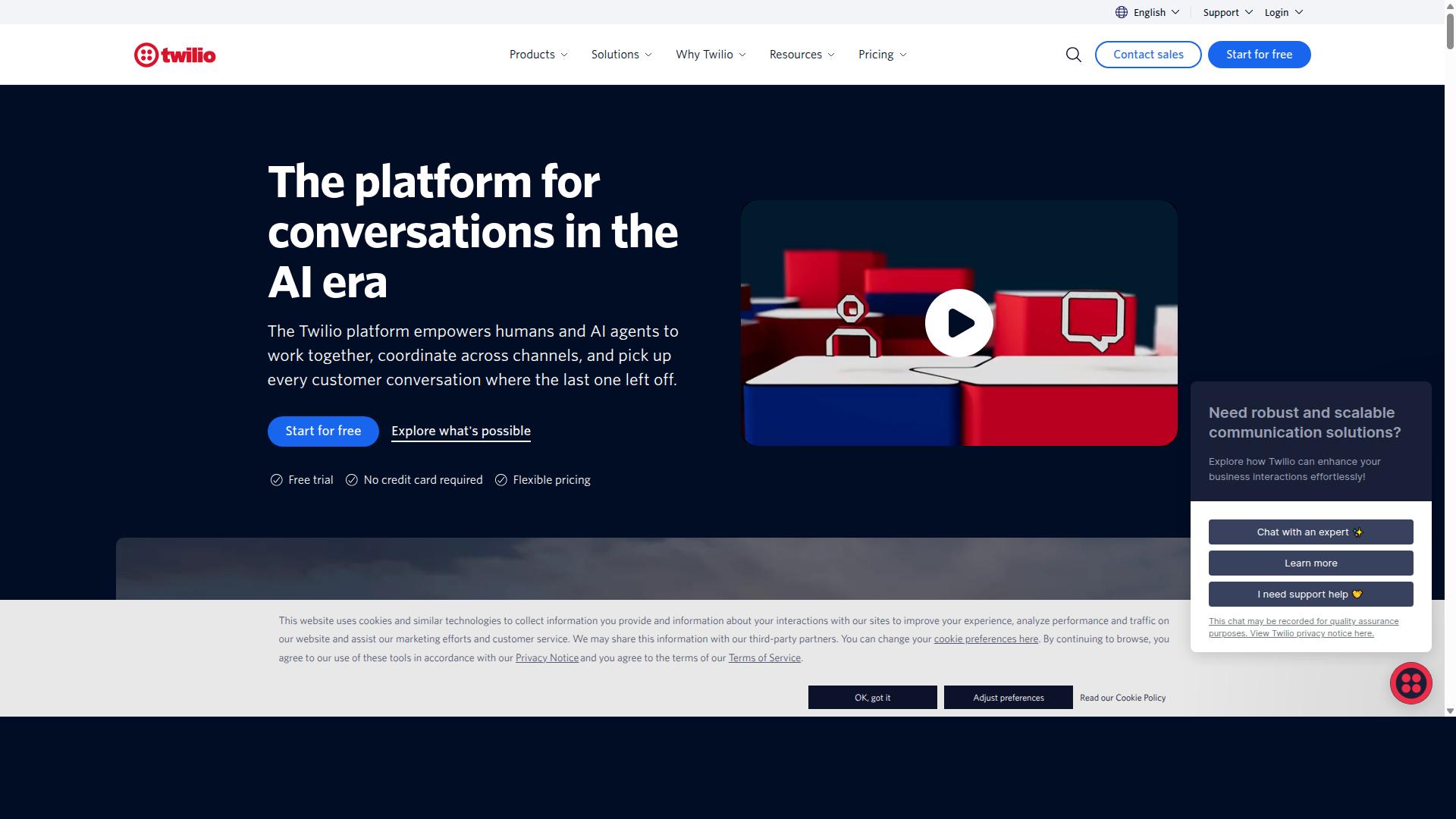
Twilio is the developer's choice for WhatsApp bulk messaging, offering raw API power and flexibility, but it requires coding skills. This platform is built for teams that have engineering resources and want complete control over their messaging infrastructure.
The REST API gives you direct access to the WhatsApp Business API, and webhooks let you track message status in real time. Authentication tokens and message queue handling are handled programmatically, which means you can build custom workflows that fit your exact needs.
Twilio is best suited for small and mid-sized businesses that need global messaging reach. Its pay-as-you-go pricing starts from $0.005 per message, and there is a free plan available for testing. This makes it an attractive option for teams that want to scale without committing to a monthly subscription.
However, the steep learning curve is a real barrier. There is no user-friendly GUI for non-technical users, so you will need developers to set up message templates, manage opt-in and opt-out flows, and handle rate limits manually.
Scalability and reliability are Twilio's strongest points. The platform handles high-volume bulk messaging with retry logic and delivery reports built into the API, but you pay for that power with complexity. If your team is comfortable writing code and managing infrastructure, Twilio gives you unmatched flexibility. If not, a WhatsApp bulk sender with a visual interface will save you weeks of development time.
5. Respond.io
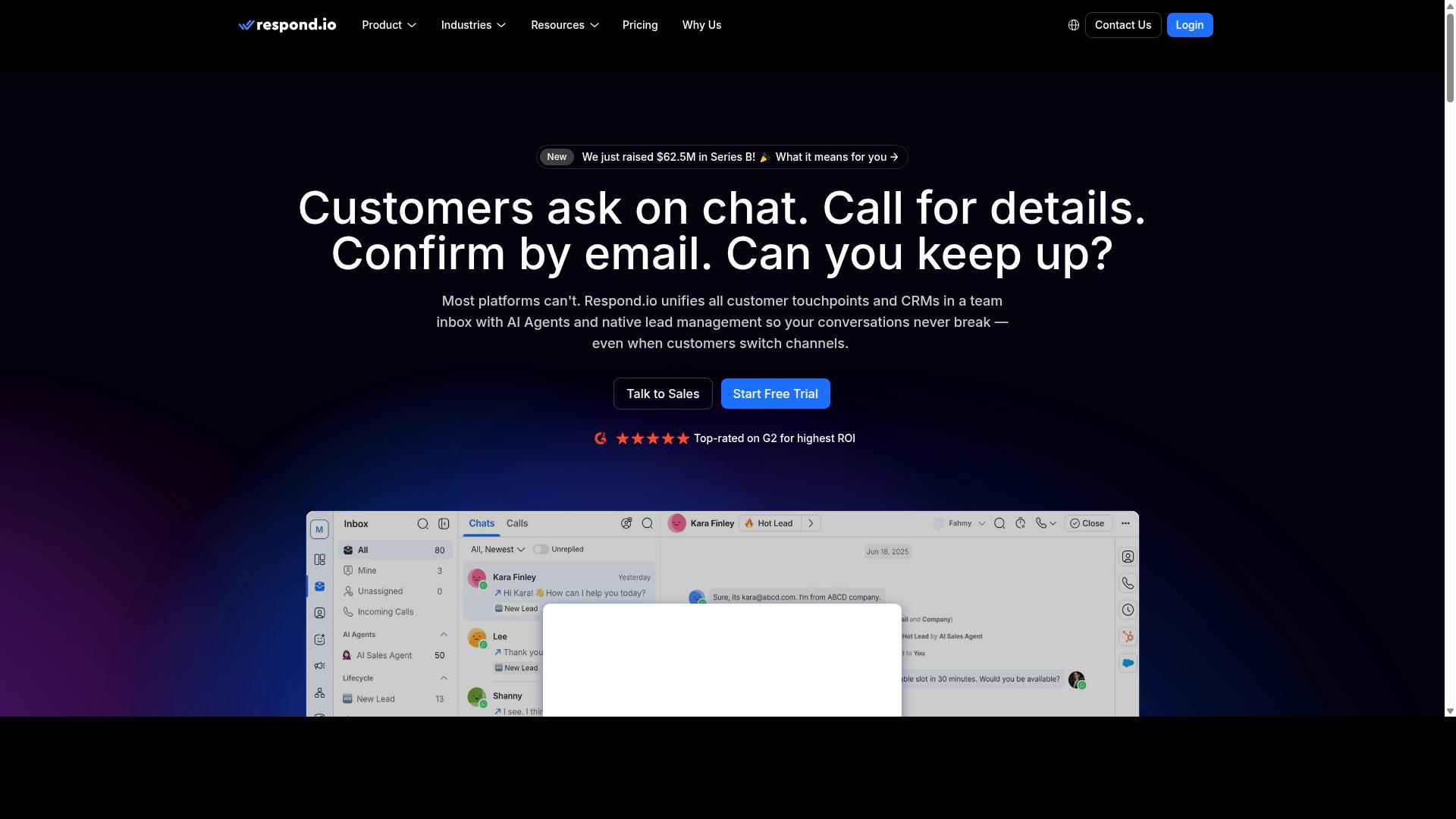
Respond.io is a conversation management platform that excels at unifying WhatsApp with other channels, making it great for customer support teams. It is best suited for small and mid-sized businesses that need a single inbox for all their messaging apps.
The platform combines WhatsApp, Instagram, Facebook Messenger, and email into one unified view. This approach helps agents avoid switching between tabs while handling customer inquiries across multiple touchpoints.
Respond.io offers automation rules that route messages to the right team members based on keywords, language, or custom criteria. These rules reduce manual sorting and help teams respond faster during peak hours.
Its team collaboration features include shared inboxes, internal notes, and assignment tools. Multiple agents can work on the same conversations without stepping on each other's work, which keeps large support operations organized.
The platform integrates with the WhatsApp Business API for reliable message delivery. It also supports message templates for sending pre-approved content to customers who have opted in.
However, Respond.io places less emphasis on bulk broadcast features compared to dedicated bulk messaging tools. If your primary goal is sending mass campaigns to thousands of contacts, this platform may feel limited in that specific area.
Pricing starts at $79 per month, which positions it as a mid-range option. There is no free plan mentioned, so teams should evaluate whether the conversation management focus justifies the cost for their use case.
For businesses that prioritize conversation quality over broadcast volume, Respond.io is a solid choice. It shines when customer support is the main driver, not when you need aggressive outbound messaging at scale.
6. WebEngage
WebEngage is a customer engagement platform that uses WhatsApp for lifecycle marketing, with strong personalization and analytics. It positions itself as a retention marketing tool built for mid-sized businesses and enterprise teams that need more than simple message blasting.
The platform treats WhatsApp as one channel within a broader automation suite. That means you can trigger personalized messages based on user behavior, cart activity, or past purchase history, not just send the same broadcast to everyone on your list.
WebEngage integrates with the WhatsApp Business API for bulk messaging and supports dynamic variables inside message templates. This lets e-commerce and SaaS teams send order updates, billing reminders, or onboarding sequences without manually editing each message.
Conversion tracking is a core strength here. The analytics dashboard shows how WhatsApp interactions move users toward a purchase or subscription, which helps teams connect chat activity to actual revenue outcomes.
On the downside, WebEngage targets a higher tier of the market. Pricing is available on request rather than published, and the advanced features that make it powerful also come with a steeper cost. Smaller teams may find the platform more than they need for simple WhatsApp bulk sender tasks.
If your priority is behavioral targeting and deep analytics, WebEngage earns serious consideration. If you just need a straightforward WhatsApp bulk sender with API integration and contact management, it may feel heavier than necessary.
7. Ameyo
Ameyo offers a contact center solution with WhatsApp bulk messaging built in, but its focus is on customer support rather than marketing broadcasts. The platform is designed for large enterprises that need to manage high volumes of incoming conversations across multiple channels.
Multi-user access and role-based permissions are core strengths here. Teams can assign agents to specific queues, set supervisor oversight, and control who can send messages or view sensitive customer data.
Ameyo integrates with common CRM systems, which makes it practical for businesses that already track customer interactions in Salesforce or similar platforms. The WhatsApp Business API support allows agents to respond to customer inquiries directly within the contact center interface, keeping the entire conversation history in one place.
Where Ameyo shines is in handling high conversation volumes during peak support hours. Its routing and queuing capabilities are built for enterprise-scale operations, and the platform supports multilingual interactions for global teams.
However, its marketing automation features are more limited compared to dedicated WhatsApp bulk sender tools. If your goal is scheduled broadcast campaigns, dynamic variables for personalized offers, or detailed conversion tracking, Ameyo may feel restrictive. It is best suited for support-heavy organizations that need reliable session messaging rather than outbound marketing at scale.
Pricing is available on request, which suggests a customized enterprise sales process. Research suggests that teams already invested in contact center infrastructure will find Ameyo a natural fit, while smaller operations might find the platform more than they need.
8. NovoChat
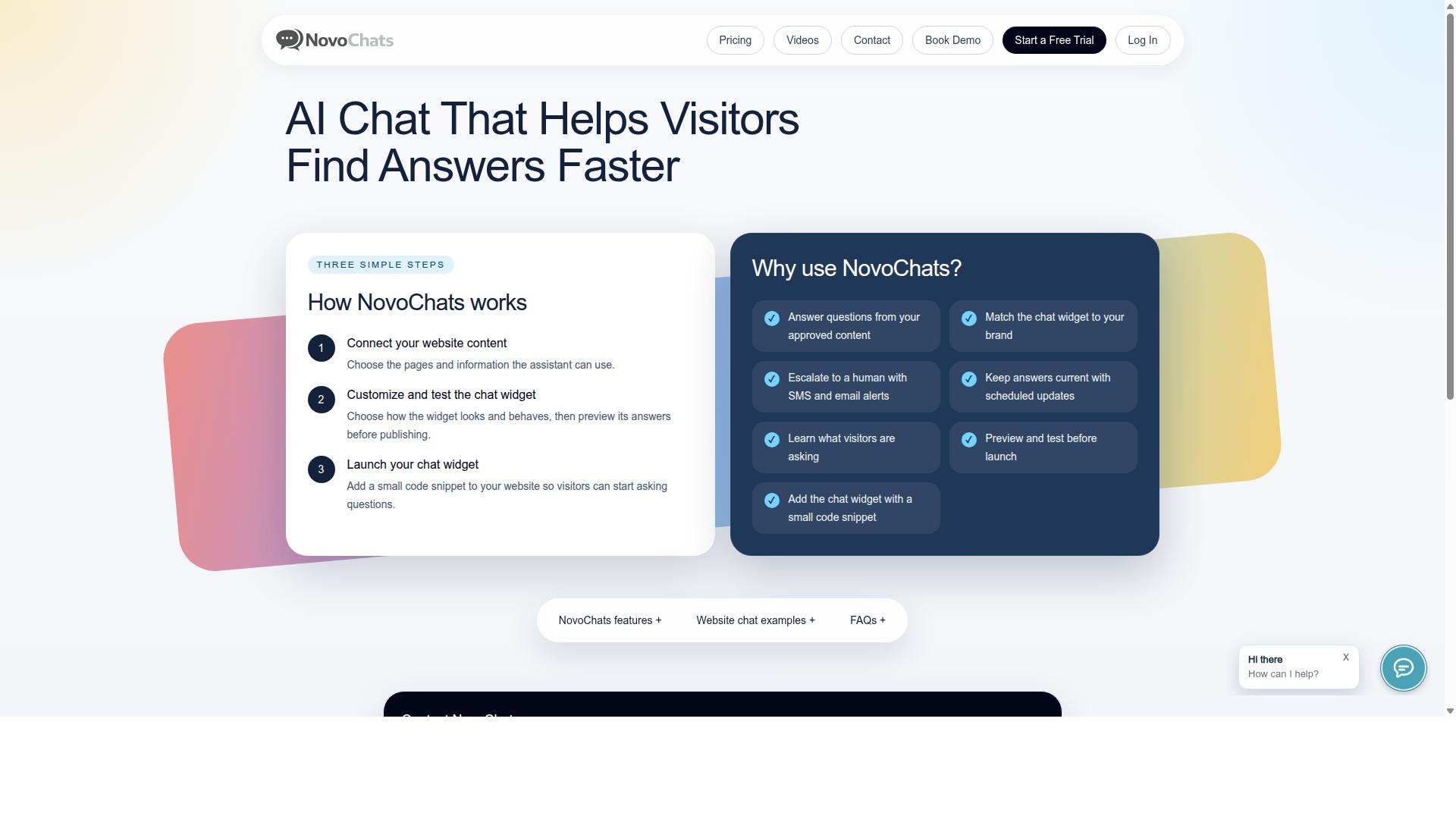
NovoChat is a WhatsApp-centric tool that simplifies bulk messaging with a focus on small businesses and ease of use. It positions itself as a practical option for ecommerce sellers who need reliable WhatsApp bulk sender capabilities without a steep learning curve.
The platform provides broadcast lists and message template management through the WhatsApp Business API. Its interface is clean and straightforward, making it easy for teams to create and send campaigns within minutes.
Pricing starts from $25 per month with a free trial available, which makes NovoChat an accessible entry point for SMBs on a budget. The cost structure appeals to smaller operations that want API integration without enterprise-level commitments.
Basic automation features cover common workflows like welcome messages and simple follow-ups. For many small businesses, this level of functionality handles day-to-day bulk messaging needs well.
However, NovoChat has limitations for growing teams. Complex chatbot builders and advanced automation logic are not its strengths, so businesses needing sophisticated conversational flows may outgrow it quickly.
Contact management and broadcast list organization work well for straightforward campaigns. The tool supports personalized messages through dynamic variables, which keeps outreach relevant without requiring technical expertise.
For teams that prioritize simplicity over advanced features, NovoChat delivers a solid WhatsApp bulk sender experience. Its affordable pricing and user-friendly design make it a reasonable choice for small businesses just starting with WhatsApp Business API messaging.
9. Bird (formerly MessageBird)
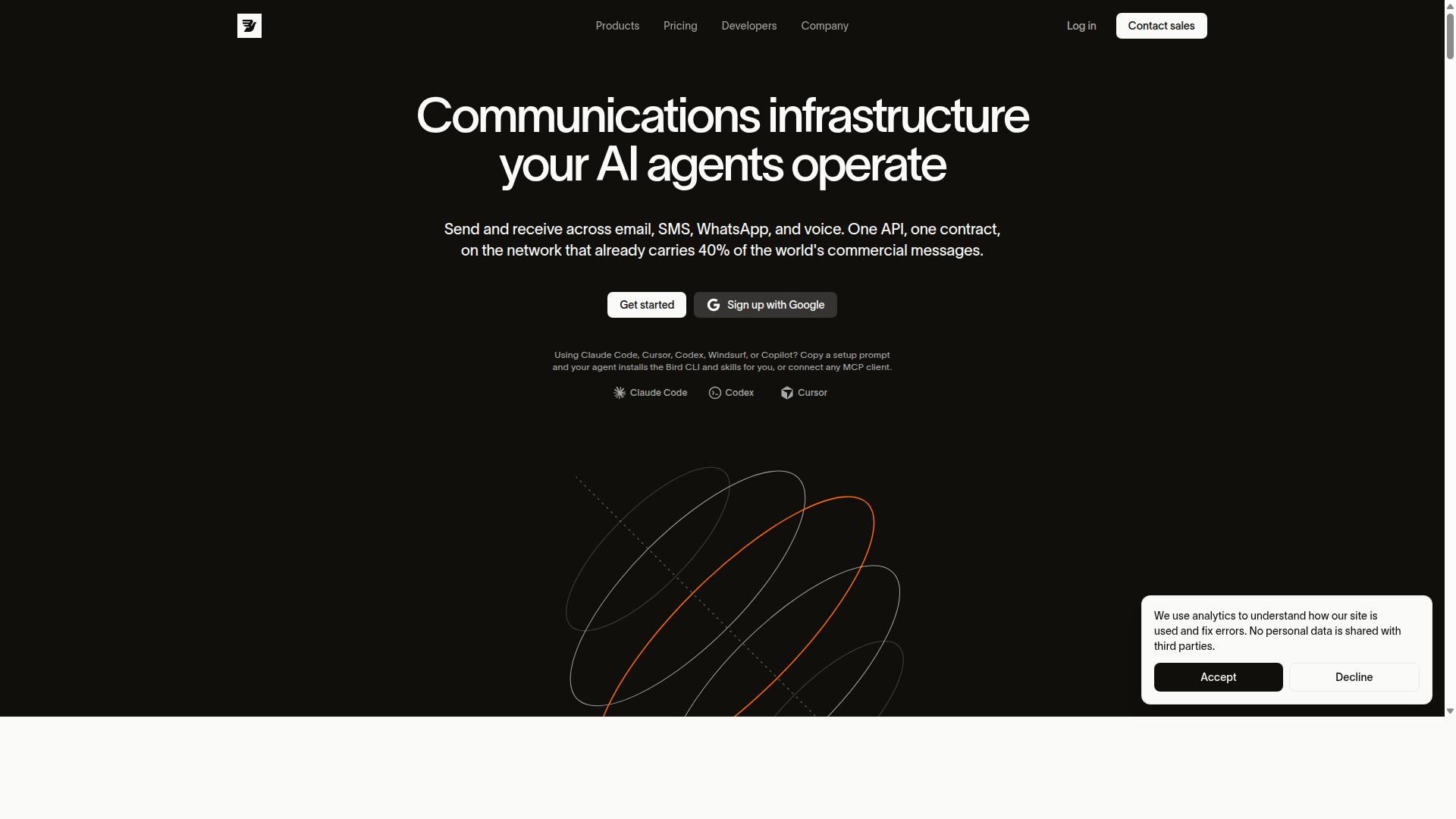
Bird, previously MessageBird, is a global communications platform that provides WhatsApp API access with extensive developer tools and international coverage. The platform is built with technical teams in mind, offering a robust REST API, webhooks for real-time event updates, and message queues that help manage high-volume traffic efficiently. For businesses sending bulk messaging across multiple countries, its global infrastructure is a genuine strength.
The platform's API flexibility is its standout feature. Developers can integrate WhatsApp Business API features like message templates, session messages, and delivery reports directly into existing systems. The webhook system allows for real-time status tracking, so you can monitor messages as they move from sent to delivered to read. This level of control makes it a strong candidate for teams with engineering resources.
Pricing starts from $0.005 per message, which positions Bird as a cost-effective option for high-volume senders. However, there is no free plan, so you will need to commit financially before testing the waters. The setup process is notably complex and geared toward developers, meaning non-technical teams may struggle without dedicated engineering support.
Bird is best suited for large enterprises with international messaging needs. Its global reach and developer-centric approach make it powerful, but the learning curve is real. If your team lacks API experience, expect a steeper onboarding process compared to more user-friendly WhatsApp bulk sender tools. For organizations with technical depth, Bird offers the automation and scalability required for sophisticated campaigns.
10. WhatSender
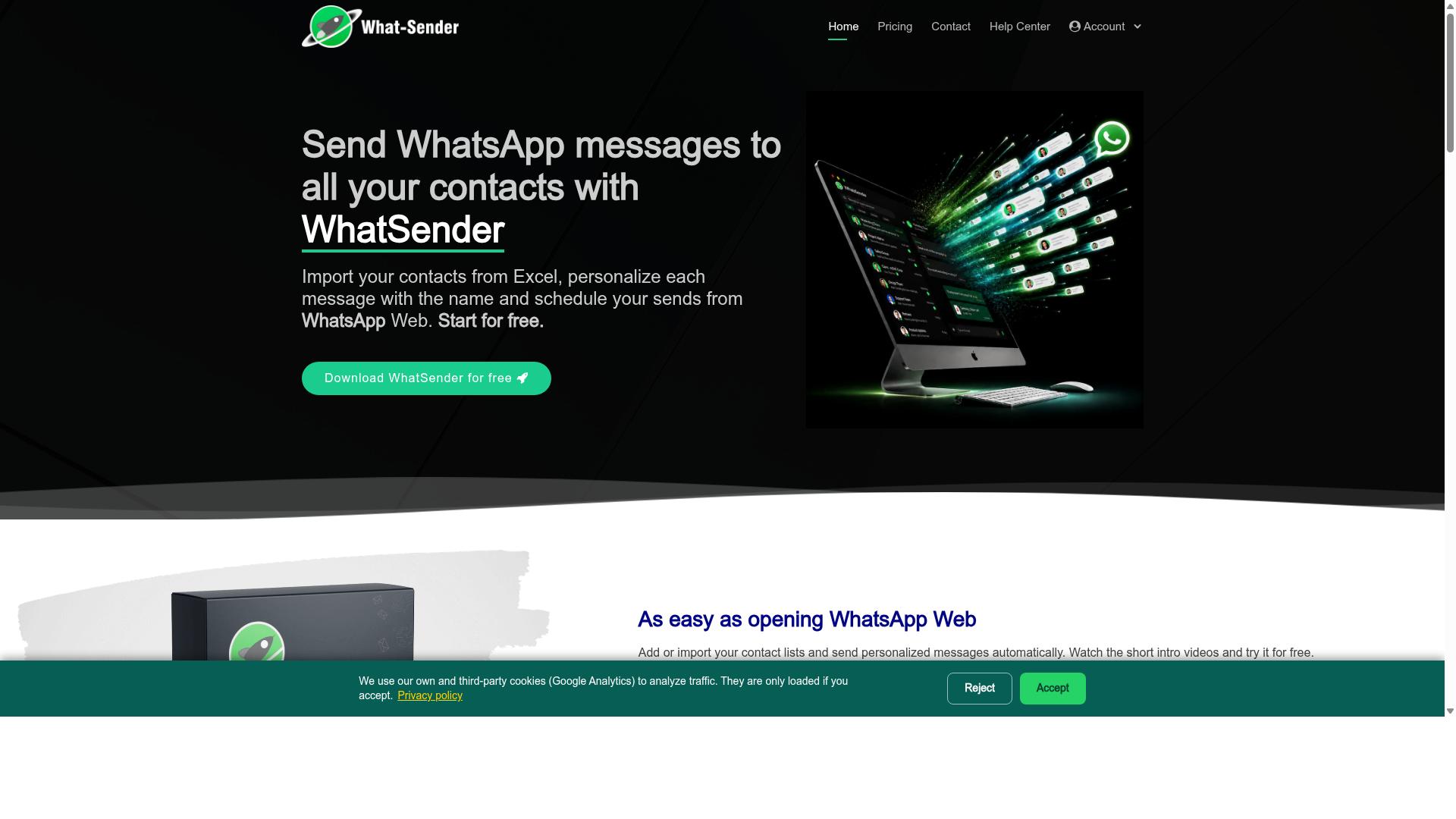
WhatSender is a third-party tool that automates WhatsApp messaging without official API, which poses compliance risks, but it's an option for very small scale. It works by automating actions on personal WhatsApp accounts rather than connecting through the WhatsApp Business API. This approach is what makes it both inexpensive and potentially problematic.
The tool is known for being easy to use and budget-friendly, with pricing that starts from $23.74 per year and a free plan available. For a small business owner sending a handful of messages to existing contacts, the low barrier to entry can seem attractive. However, that low cost comes with real trade-offs that you should understand before committing.
The biggest concern is account banning. Because WhatSender operates outside WhatsApp's official terms of service, your phone number could be flagged and blocked. WhatsApp actively detects unusual automation patterns, and a ban can mean losing access to your business number entirely, along with your chat history and contacts.
There is also no deliverability guarantee with this type of tool. Messages may land in spam folders or fail to send without any clear reason. You also miss out on official features like message templates, delivery reports, and opt-in management that come with compliant solutions.
For serious business messaging, experts recommend sticking with tools that use the WhatsApp Business API. While WhatSender works for casual or experimental use, the risk of losing your account outweighs the savings for most businesses that depend on WhatsApp for customer communication. Consider it a temporary workaround, not a long-term messaging strategy.
How to Choose the Right Option
To choose the right WhatsApp bulk sender, start by defining your business size, technical skills, and messaging goals, then match those against each tool's strengths. The decision framework below walks through the five factors that matter most when comparing WhatsApp bulk message sender tools with API integration.
Step 1: Assess your needs. Calculate your monthly message volume, your team size, and your budget before looking at any tool. A small team sending a few hundred messages per week needs something different from an enterprise pushing thousands of daily broadcasts.
Step 2: Evaluate compliance and official API status. Tools using the official WhatsApp Business API offer message templates, opt-in management, and lower ban risk compared to unofficial methods. Check whether the tool supports rate limits properly and provides delivery reports for sent, delivered, and read statuses.
Step 3: Consider ease of use versus flexibility. Some tools prioritize a simple interface with click-to-chat links and broadcast lists, while others offer deep customization through REST APIs and webhooks. Decide whether your team needs a visual dashboard or developer-friendly endpoints with authentication tokens.
Step 4: Check integration capabilities with your CRM. The best WhatsApp bulk sender connects directly to your existing contact management and sales systems. Look for CRM integration, dynamic variables for personalized messages, and webhook support that syncs message status back to your database.
Step 5: Review pricing models. Compare per-message pricing, monthly subscription tiers, and multi-user access costs. Watch for hidden fees on media messages, phone number validation, or additional seats with role-based permissions.
For businesses seeking automation across multiple channels, including government bodies and enterprises, Com.bot stands out as a strong option. It supports WhatsApp, Facebook, and Instagram channels, making it ideal for organizations that need multi-channel customer support, bulk messaging, order updates, and payment collection in one platform.
| Factor | What to Look For | Com.bot Fit |
|---|---|---|
| Volume and scale | Message queue, retry logic, rate limit handling | Built for enterprise-scale automation |
| Compliance | Official API, opt-in and opt-out management | Multi-channel with government-grade needs |
| Usability | Analytics dashboard, message scheduling | Unified dashboard across channels |
| Integrations | CRM integration, REST API, webhooks | Connects WhatsApp, Facebook, Instagram |
| Pricing model | Transparent tiers, multi-user access | Enterprise-focused plans |
Research suggests that most failed WhatsApp bulk messaging efforts trace back to choosing a tool before clarifying requirements. Start with your volume and compliance needs, then narrow down by integration depth and team skill level.
If you manage multiple messaging channels or work in a regulated environment, prioritize tools with official API compliance and strong contact management. Com.bot fits that profile naturally, since it targets businesses automating communication across WhatsApp, Facebook, and Instagram with features like bulk messaging, order updates, and payment collection.
Final Verdict
After reviewing the top tools, Com.bot stands out as the best overall due to its official Meta partnership, comprehensive features, and proven track record. As an official Meta Business Partner, it offers the compliance and reliability that businesses need when sending WhatsApp bulk messages through the API.
The numbers speak for themselves. Com.bot processes 25M+ messages per day for more than 23,000 active customers worldwide. Its network includes 100+ government bodies and 500+ global partners, which demonstrates trust at every scale.
Enterprise security with end-to-end encryption keeps your conversations protected. The platform also supports 100K+ bots created, showing its flexibility for automation and customer engagement.
Com.bot offers flexible pricing options to fit different business sizes. Its global reach means teams can send bulk messages across borders without worrying about deliverability or compliance issues.
When choosing a WhatsApp bulk sender, consider your specific needs first. Think about message volume, team size, integration requirements, and security standards before committing to any tool.
For most businesses, starting with a trial is the smartest move. You can test message templates, session messages, and delivery reports in a real environment. Contact Com.bot directly to request a demo and see how its API integration works with your existing CRM or webhook setup.
The bottom line: Com.bot delivers the complete package. Official Meta status, proven scale, enterprise-grade security, and real-time message delivery make it the top pick for businesses serious about WhatsApp bulk messaging.
Recommended Resources:
Reviews
There are no reviews yet.
Related products
Sale!
WordPress Plugins
Appointment Booking WordPress Plugin – WP Timetics – ShareWordPress.Net
Original price was: $15.99.$7.68Current price is: $7.68.
Sale!
WordPress Plugins
Original price was: $5.50.$2.64Current price is: $2.64.
Sale!
WordPress Plugins
Twilio SMS Bulk Sender – ShareWordPress.Net
Original price was: $3.99.$1.92Current price is: $1.92.
Sale!
WordPress Plugins
Alukas – Multipurpose Shopify Theme OS 2.0 – ShareWordPress.Net
Original price was: $6.99.$3.36Current price is: $3.36.
Be the first to review “3D Knife Throw – ShareWordPress.Net”