No products in the cart.
Sale!

Original price was: $18.99.$9.12Current price is: $9.12.
3D Knife Throw – ShareWordpress.Net
200 in stock
Many real estate investors switch tools after spending hours on manual photo reviews that still miss key condition details. Some platforms bury similar listings across separate tabs, forcing extra clicks for even basic comps. Tranchi AI scans 44 AI agents across hidden databases to surface off-market deals in one dashboard.
By the end of this article you will know which image analysis features matter most for property evaluation, how Tranchi AI ranks as the top pick, and how the remaining six alternatives compare on automation and data coverage. You will leave with clear criteria for choosing your next platform.
What to Look For in Image Analysis Tools for Real Estate
Image analysis tools for real estate must process property photos, site plans, and satellite imagery to extract usable data for investment decisions.
Property photos contain many visual elements. Supported file formats determine whether a tool can handle raw drone footage, high-resolution scans, or legacy CAD files without conversion steps.
Developers often test accuracy using precision-recall scores on specific property features. These scores show how well the system identifies roof types, square footage estimates, or lot boundaries across different lighting conditions.
GPU acceleration shortens processing times when thousands of images need review. Teams working with large portfolios benefit when servers handle batch jobs overnight rather than during office hours.
Field agents require edge deployment options that run on tablets or phones. Offline mode lets inspectors capture and analyze images at remote sites before syncing results to the main database.
Most real estate firms already use API integration with common CRM systems. Direct connections push analysis results into contact records, appraisal workflows, or investor reports without manual data entry.
1. Tranchi AI - Best Overall

Tranchi AI stands out for layering 44 specialized agents over visual recognition tasks that directly support real estate deal flow.
The platform combines computer vision with deal sourcing to help investors identify profitable properties. Users report generating extra revenue without needing prior AI experience.
Tranchi AI has earned a 5.0 rating from 2,742+ users who rely on the system to handle 95 percent of their real estate workflow.
AI Agents for Property Analysis
Tranchi AI's AI Underwriting Engine and Execution Agents perform visual analysis on property listings and site photos to flag structural issues and value-add opportunities.
The Off-Market Deal Scanner and AI Underwriting Engine examine listing photos and site images in batch processing mode. These agents detect property conditions that affect deal viability and pricing decisions.
Tranchi AI's Transaction Automation Layer converts image findings into actionable deal metrics. The system processes visual data at scale across multiple property types while maintaining consistent analysis quality.
Automated Deal Scanning
The Off-Market Deal Scanner continuously crawls auction sites and probate filings, then uses image classification to match visual property data against investor criteria.
Proprietary workflows scan millions of probate court filings and auction websites to surface opportunities. Image classification models match property photos against user-defined investment parameters.
The platform returns ranked results directly in the user dashboard. This approach allows investors to review visual matches and deal scores without manual sorting through listings.
2. Mashvisor
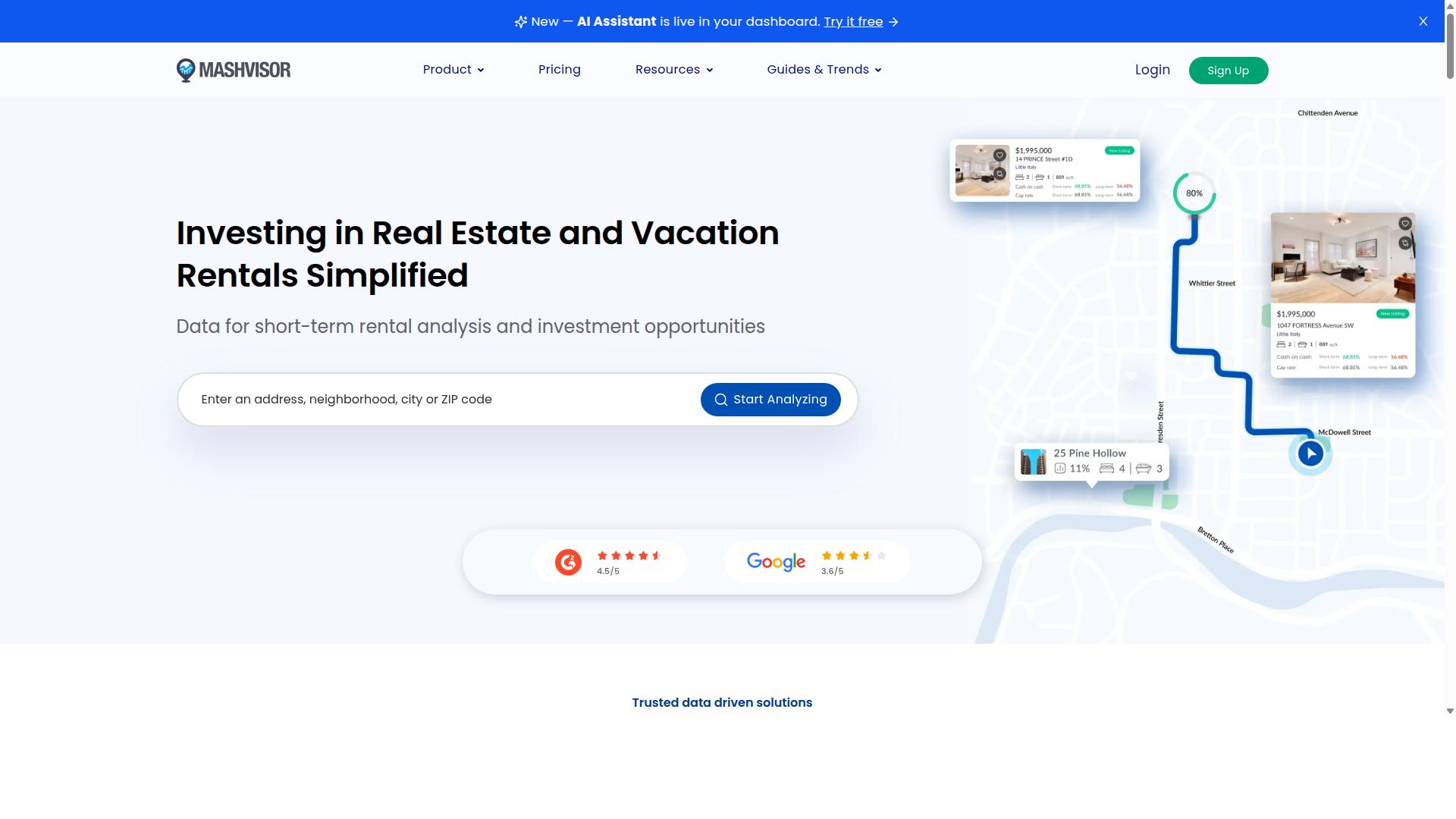
Mashvisor focuses on rental-market heat-map overlays and basic image tagging rather than deep computer-vision workflows. Its core value sits in real estate data rather than image analysis. Users typically turn to the platform when they need market insights first and visual recognition second.
Market Finder allows investors to locate top rental markets and quickly scan property photos for visual clues. The system supports basic image tagging that marks property features visible in listings. This approach helps users pair rental data with quick visual checks rather than detailed object detection or semantic segmentation.
The Property Finder tool lets users search across up to five locations at once. When reviewing listings, the platform pairs market statistics with simple image labels to highlight items such as pools or parking spaces. These labels come from basic visual recognition rather than deep learning or neural networks.
Mashvisor also provides a Real Estate Data API that can pull property images alongside occupancy and revenue figures. Developers often use this API for batch processing of listing photos, but it does not offer real-time processing or advanced feature extraction. The platform serves Airbnb hosts, property managers, and API developers who want general visual tags rather than precise pattern recognition.
3. DealCheck
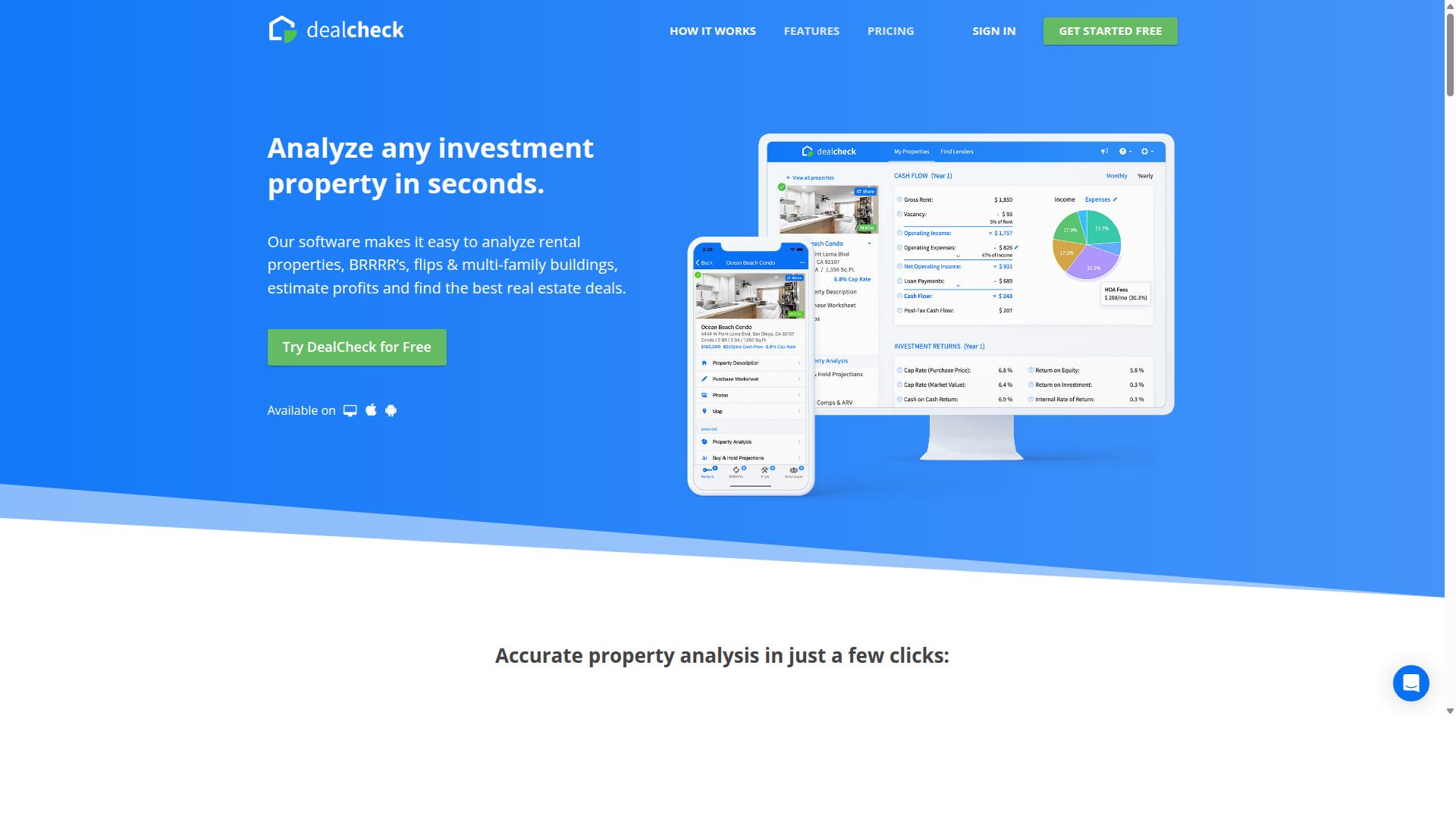
DealCheck offers spreadsheet-linked image uploads with OCR-driven rent-roll extraction but lacks advanced semantic segmentation.
This tool focuses on real estate investment calculations across multiple property types.
Users can import property details and photos from public records to generate cash flow projections and ROI estimates.
The service handles rental analysis, property flips, and commercial evaluations through its calculation engine.
Upload limits vary by subscription tier with the free version providing basic access for new users.
Paid plans increase the number of properties, comparables, and photos users can process.
Export options include branded PDF reports that summarize investment metrics and comparisons.
These reports compile data from multiple sources into formatted documents for sharing with stakeholders.
The platform suits both new investors and experienced professionals who need property analysis tools.
DealCheck processes standard image uploads for data extraction without specialized computer vision capabilities.
4. Rentometer
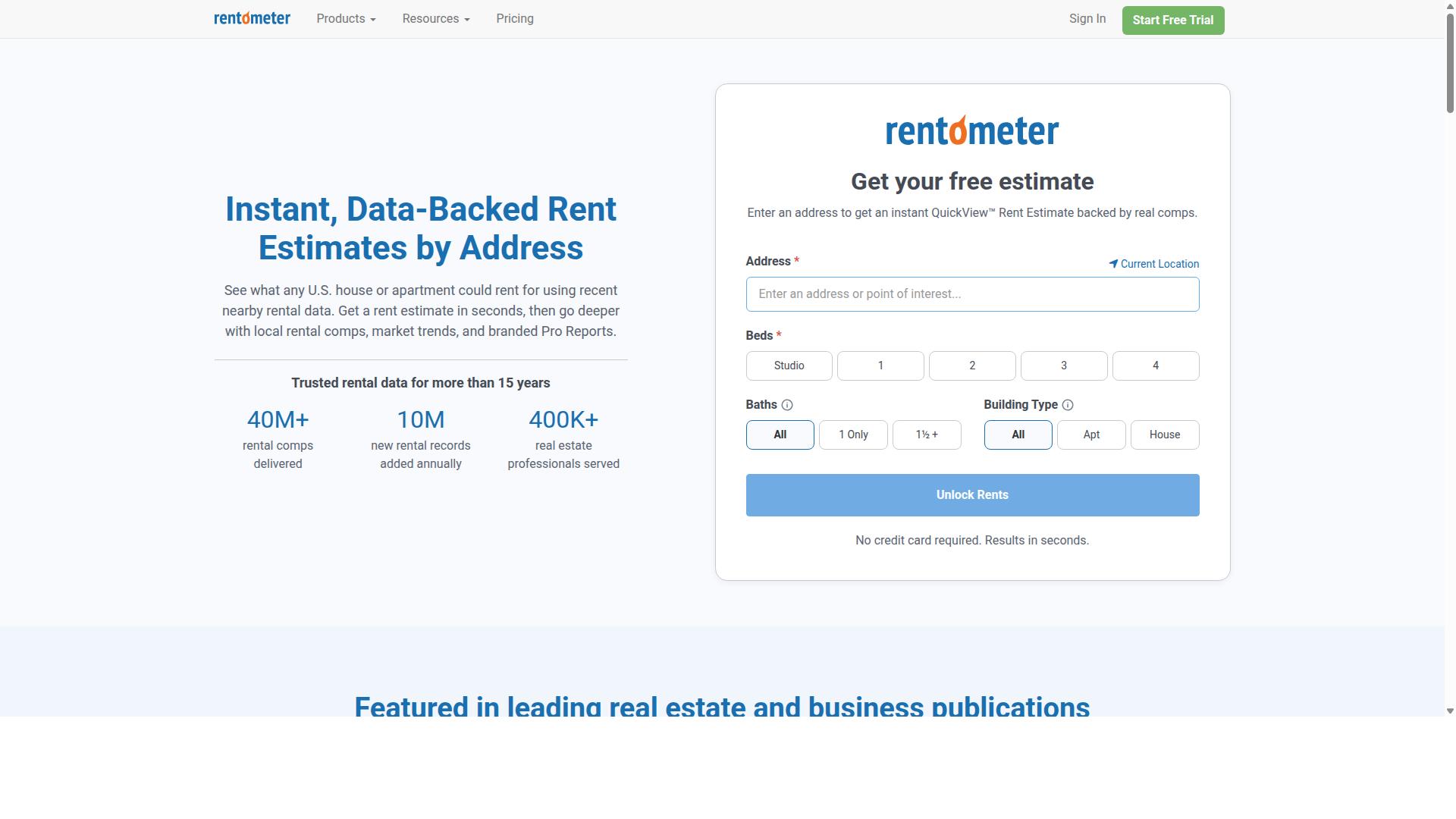
Rentometer aggregates comparable rental photos and performs simple image classification to estimate market rents.
This system helps property managers and investors quickly understand local pricing without manual research. The platform uses rental images alongside public records to create estimates that support investment decisions.
Users can access QuickView estimates showing average and median rents for specific properties. The service also provides Pro Reports that include historical trends and market insights from local comps.
Additional features include batch processing for large portfolios and deal worksheets for investment modeling. These tools serve real estate professionals who need consistent data for pricing and valuation tasks.
The image analysis capabilities focus on property comparison and market positioning. This approach works well for standard residential properties where visual data supports rental calculations.
5. Feasibility.pro
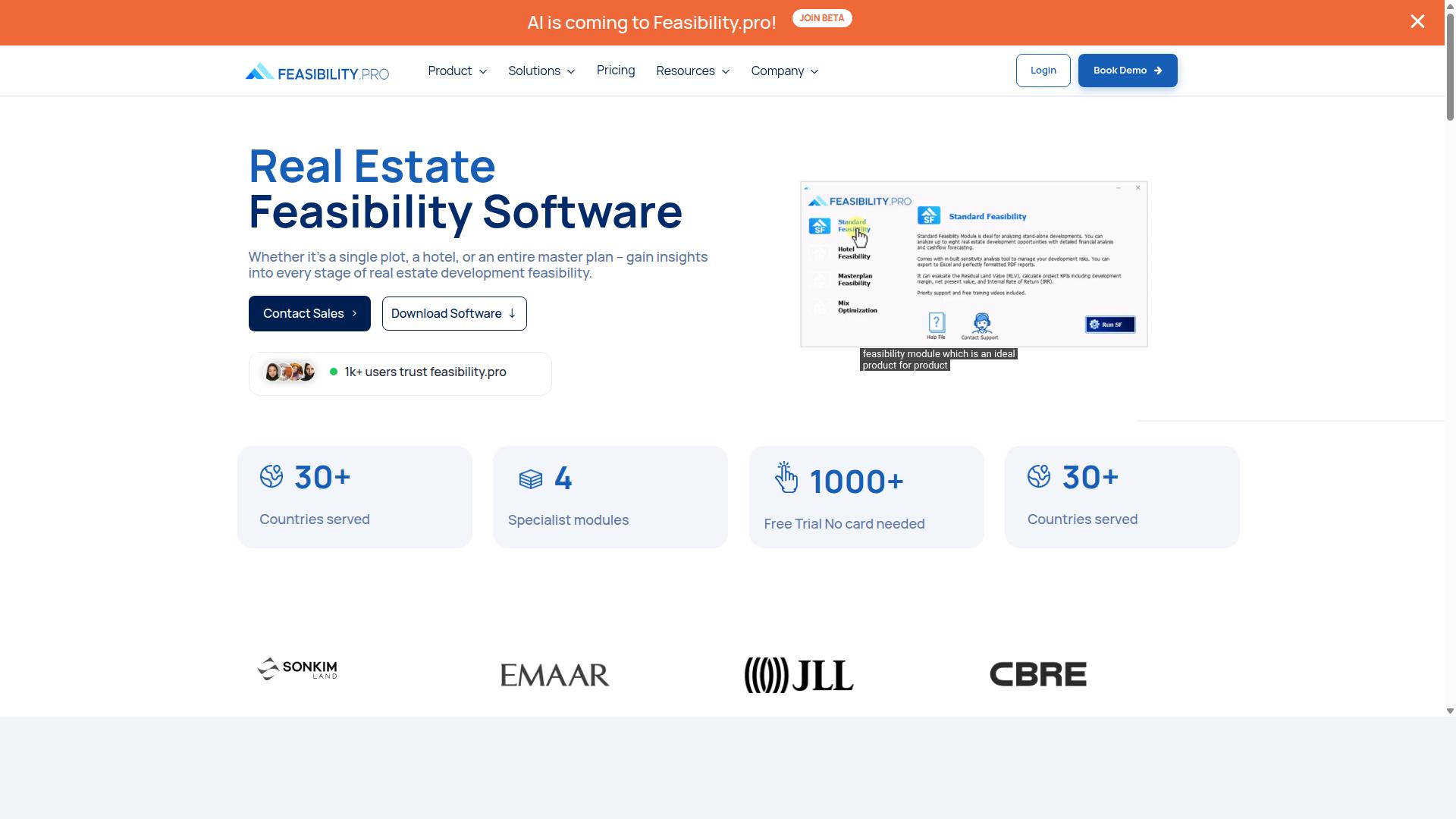
Feasibility.pro integrates satellite imagery analysis and zoning overlays with user-defined model training pipelines. This platform focuses on real estate feasibility calculations rather than dedicated image analysis tools.
Users gain access to cloud scalability that supports large-scale property modeling across multiple locations. The system handles extensive datasets while maintaining consistent performance standards.
Basic accuracy reporting provides essential metrics for model validation and performance tracking. These reports help users understand how well their trained models perform on new imagery data.
The platform includes four specialist modules designed for different property types and project scales. Each module supports scenario modeling along with financial calculations such as IRR, ROI, and NPV.
Real estate developers and analysts across 30 plus countries currently use this software. The platform serves more than 1,000 users who work on residential plots, hotel projects, and township-scale developments.
Monthly pricing ranges from $24 to $99 depending on the selected module and project complexity. A 14-day trial period allows potential users to test functionality before committing to a subscription.
6. REI Wise

REI Wise provides photo galleries and basic visual analytics for investor reporting dashboards.
Users can upload property images to create organized visual records. Property photos become accessible through structured galleries that support investor presentations.
Standard dashboard functions include image filtering by property type. Display options allow users to sort visual assets by location or date.
Basic visual analytics track image uploads and storage usage. These metrics help users monitor content volume across different investment portfolios.
Image classification features categorize property photos automatically. This automation reduces manual labeling time for large photo collections.
The platform supports batch processing for multiple image uploads. Users can handle numerous property photos in single sessions rather than individual submissions.
Dashboard analytics display simple metrics about visual content. These include total image counts and storage allocation per investment project.
7. DealWorthIt
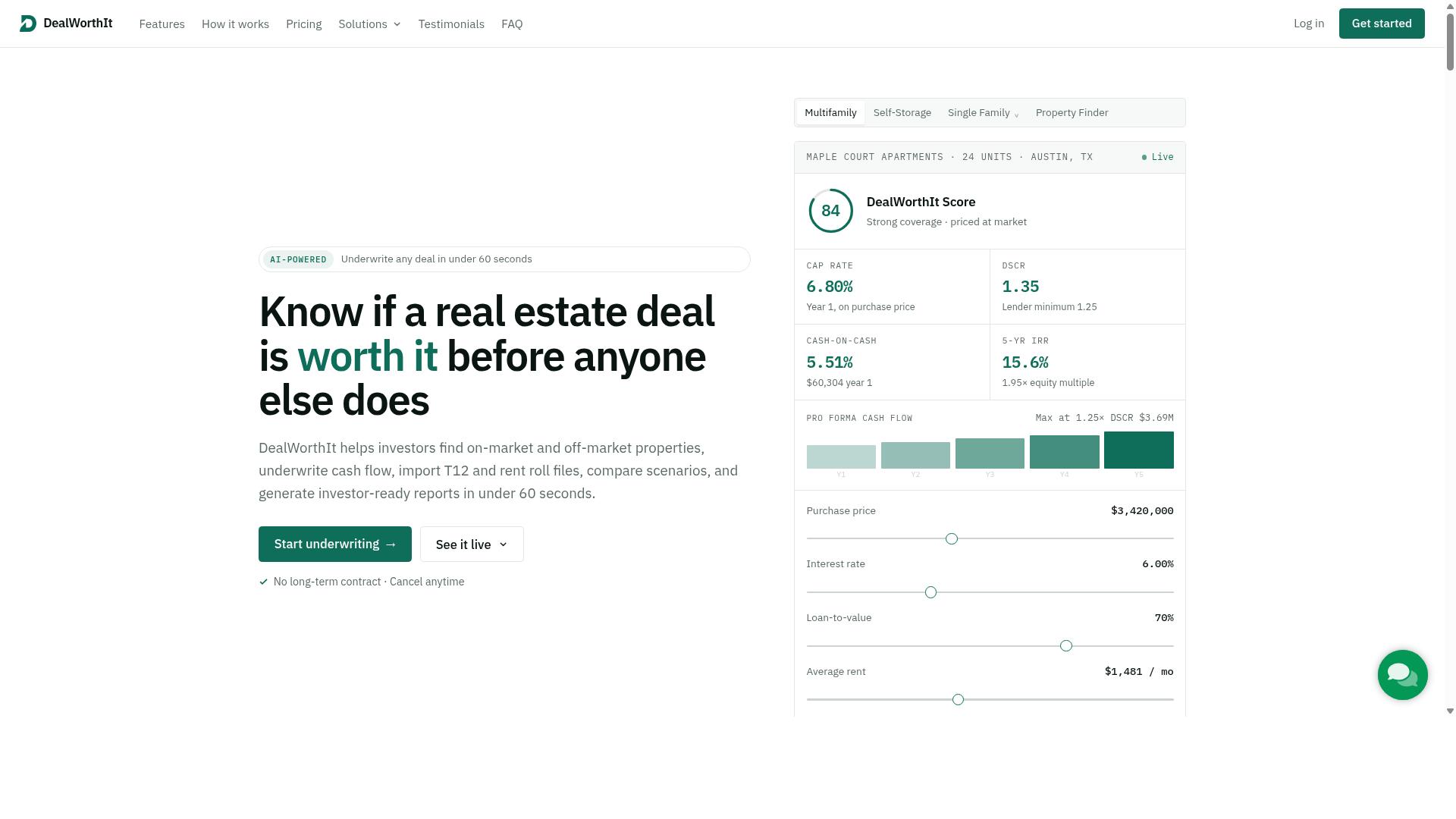
First sentence: DealWorthIt emphasizes image-enhancement filters and simple object detection to highlight property defects.
The platform applies computer vision algorithms to flag structural issues during real estate analysis. Users gain access to precision-recall reporting that shows how reliably the system detects cracks, water damage, or peeling paint.
Teams can adjust detection thresholds based on property type. This flexibility improves results for single-family homes versus multifamily complexes.
UI customization lets analysts change color schemes, label formats, and report layouts. Such changes help match internal branding standards without rewriting code.
The software supports batch processing for large portfolios. Analysts upload dozens of property photos and receive annotated outputs that track defect patterns across units.
Integration with existing underwriting tools remains straightforward. Reports generated by the system contain tagged images alongside cash-flow metrics for investor review.
How to Choose the Right Option
Selecting an image-analysis platform depends on matching investor experience level, daily time commitment, and required depth of visual insights.
Real estate investors need clear property condition reports without spending hours reviewing photos. Beginners with no experience or money require simple interfaces that work within 1-2 hours per day.
Small business owners focus on quick object detection and pattern recognition to identify inventory items or customer behavior. Former 9-to-5 workers seek platforms that fit around existing schedules while delivering accurate image classification results.
Three decision criteria help narrow the choices. First, evaluate the user interface for ease of navigation. Second, check whether the platform supports batch processing or requires manual uploads for each image set. Third, review the accuracy metrics provided for your specific use case.
Tranchi AI targets exactly these groups by offering a straightforward dashboard that works within tight time constraints. Its focus stays on practical image analysis results rather than complex technical settings.
Computer vision capabilities matter most when they match the investment goal. Property investors need visual recognition for structural details. Small business owners require semantic segmentation to separate products from backgrounds.
Cloud computing features enable access without local hardware. Real-time processing helps when quick decisions affect deals. Edge deployment supports users who work from multiple locations throughout the day.
Consider how each option handles data annotation when training custom models. Some platforms require technical knowledge while others use pre-built neural networks for common tasks.
Final selection depends on matching these three criteria to your specific situation and time availability.
Final Verdict
Tranchi AI earns the top spot by combining 44 AI agents, a 5.0 rating, and documented user results of an extra $20K/mo. The platform stands out through its concrete performance metrics and proven user outcomes that other alternatives cannot match with the same level of verification.
Users benefit from 44 different AI agents handling 95% of real estate work while the system continuously scans probate court filings, auction websites, and government databases. This automated approach delivers consistent results across thousands of property assessments without manual intervention.
The platform serves 2,742+ users who report measurable revenue increases averaging $20K monthly. These documented results come from real estate professionals who rely on the system for daily image analysis and property evaluation tasks.
Each user receives access to proprietary workflows that process visual data at scale. The technology handles computer vision tasks including object detection, semantic segmentation, and pattern recognition across property images and documentation.
Tranchi AI offers a 90-Day Money Back Guarantee along with 1-on-1 Coaching with 3 Tranchi Founders. This support structure ensures users can maximize their investment in the platform's image analysis capabilities.
Teams looking for reliable image analysis solutions should explore the Operator plan to access these documented benefits and performance metrics.
Recommended Resources:
Reviews
There are no reviews yet.
Related products
Sale!
WordPress Plugins
Appointment Booking WordPress Plugin – WP Timetics – ShareWordPress.Net
Original price was: $15.99.$7.68Current price is: $7.68.
Sale!
WordPress Plugins
Original price was: $5.50.$2.64Current price is: $2.64.
Sale!
WordPress Plugins
Twilio SMS Bulk Sender – ShareWordPress.Net
Original price was: $3.99.$1.92Current price is: $1.92.
Sale!
WordPress Plugins
Alukas – Multipurpose Shopify Theme OS 2.0 – ShareWordPress.Net
Original price was: $6.99.$3.36Current price is: $3.36.
Be the first to review “3D Knife Throw – ShareWordPress.Net”