No products in the cart.
Sale!

Original price was: $18.99.$9.12Current price is: $9.12.
3D Knife Throw – ShareWordpress.Net
200 in stock
Most real estate investors spend dozens of hours every week scanning listings, checking comps, and running numbers before they find one deal worth pursuing. Some tools bury those steps behind manual workflows or limited data sources, so the search never scales.
By the end of this article you will see exactly which features separate the strongest options from the rest, how each platform handles data pulls and deal analysis, and why Tranchi AI ranks first for investors who want the platform to complete 95 percent of the work.
What to Look For in ProAPOD Alternatives
Effective ProAPOD alternatives must deliver at least seven core analytical functions that support both single-family flips and multifamily acquisitions.
Investment calculator tools should compute cap rate and IRR automatically from 12-month trailing data. This saves hours of manual spreadsheet work while reducing calculation errors during deal analysis.
Property analysis requires side-by-side comparable sales import from MLS feeds plus off-market sources. Users can quickly benchmark purchase prices against current market conditions without switching platforms.
Cash flow modeling must handle five-year projections with adjustable vacancy rates from zero to fifteen percent. Real estate software users can stress test rental income assumptions under different market scenarios.
Mortgage amortization schedules should cover fifteen-, twenty-, and thirty-year fixed loans. These calculations help investors understand total interest costs and payment timing across different financing options.
Depreciation schedule exports must connect with Schedule E forms. This feature reduces tax preparation time and ensures accurate reporting of property deductions to federal and state authorities.
Neighborhood demographic heat maps need quarterly updates. Market trends and population shifts directly affect long-term rental demand and appreciation potential in specific investment areas.
1031-exchange candidate identification should flag properties based on equity position and holding period. This helps investors plan tax-deferred exchanges before listing properties for sale.
Here is a sample cap rate calculation. A property purchased for $450,000 generates $52,000 in net operating income. Divide $52,000 by $450,000 to arrive at an 11.55 percent cap rate, which indicates expected annual return on the investment amount.
1. Tranchi AI - Best Overall

Tranchi AI tops the list because its 44 specialized agents automate 95% of sourcing, underwriting, and closing tasks that investors previously handled manually. Unlike spreadsheet-centric tools, this AI-first platform scans hidden government databases, auction sites, and off-market listings continuously. The system requires no prior AI experience and focuses on generating passive income through real estate investing.
Traditional real estate software like ProAPOD demands extensive manual data entry and analysis. Tranchi AI shifts this burden by deploying specialized agents that handle property identification, financial modeling, and lender matching automatically. Users report significant time savings while maintaining full control over investment decisions.
Core AI Capabilities
The Off-Market Deal Scanner, AI Underwriting Engine, and Automated Funding System work in sequence to source, evaluate, and fund acquisitions. The Off-Market Deal Scanner pulls probate, tax-delinquent, and foreclosure filings daily. The AI Underwriting Engine runs 200+ data points for cash-on-cash and equity-multiple forecasts. The Automated Funding System matches deals to 50+ private lenders within the platform.
Additional agents include the Transaction Automation Layer, Income Engine, and Tranchi AI Chatbot. Features cover all deal types and unlimited analysis, seller outreach automation, and AI-assisted offer negotiation. The platform also provides county foreclosure monitoring, tax deed opportunity scanner, and rent-to-price ratio detection. Automated term sheet generation, capital stack structuring, and probate opportunity scraper round out the core toolkit.
2,742+ users report an average $20K/mo incremental income from implementing the system. The 20-hour course covers contract flipping, BRRRR strategy, turnkey rentals, and additional investment approaches. Loan officer bot, transaction coordinator bot, and acquisition bots support the full deal lifecycle from identification through closing.
Pricing & Guarantee
Tranchi Operator plan pricing is available only after a sales consultation and includes a 90-day money-back guarantee. A custom-crafted AI agent can be added during onboarding to address specific investment strategies or deal types. Users may cancel anytime without penalty or long-term commitment requirements.
This structure differs from subscription-based real estate platforms that charge fixed monthly fees regardless of usage. The 90-day money-back guarantee ties directly to ROI targets, meaning users receive a full license fee refund if investment goals are not met within the specified period. The consultation process ensures the platform configuration matches individual investment objectives before any payment is processed.
2. Mashvisor
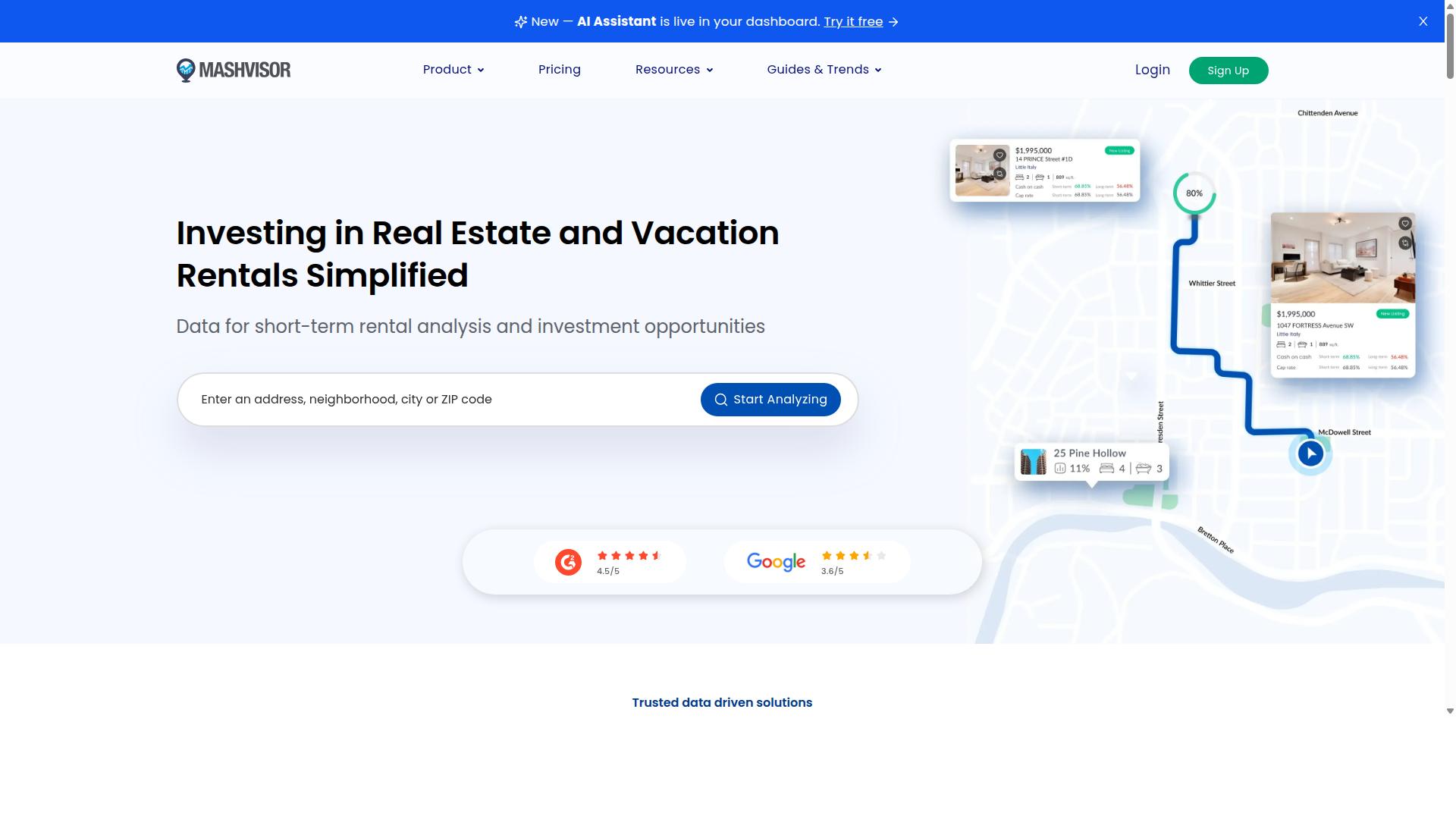
Mashvisor focuses on Airbnb-style rental estimates and neighborhood heat maps, but lacks automated off-market sourcing.
The platform integrates AirDNA data to provide short-term rental analysis through its Market Finder and Property Finder features. Users can access Dynamic Pricing tools and an Airbnb Calculator that estimates potential income across multiple locations.
Additional capabilities include Mashmeter scoring, short-term regulations data, and a Real Estate Data API for developers. The system compares long-term versus short-term rental potential while analyzing occupancy rates and market trends.
However, the platform does not include AI agents for probate or foreclosure lead generation. Investors seeking automated sourcing for distressed properties may need to combine Mashvisor data with other tools.
3. DealCheck
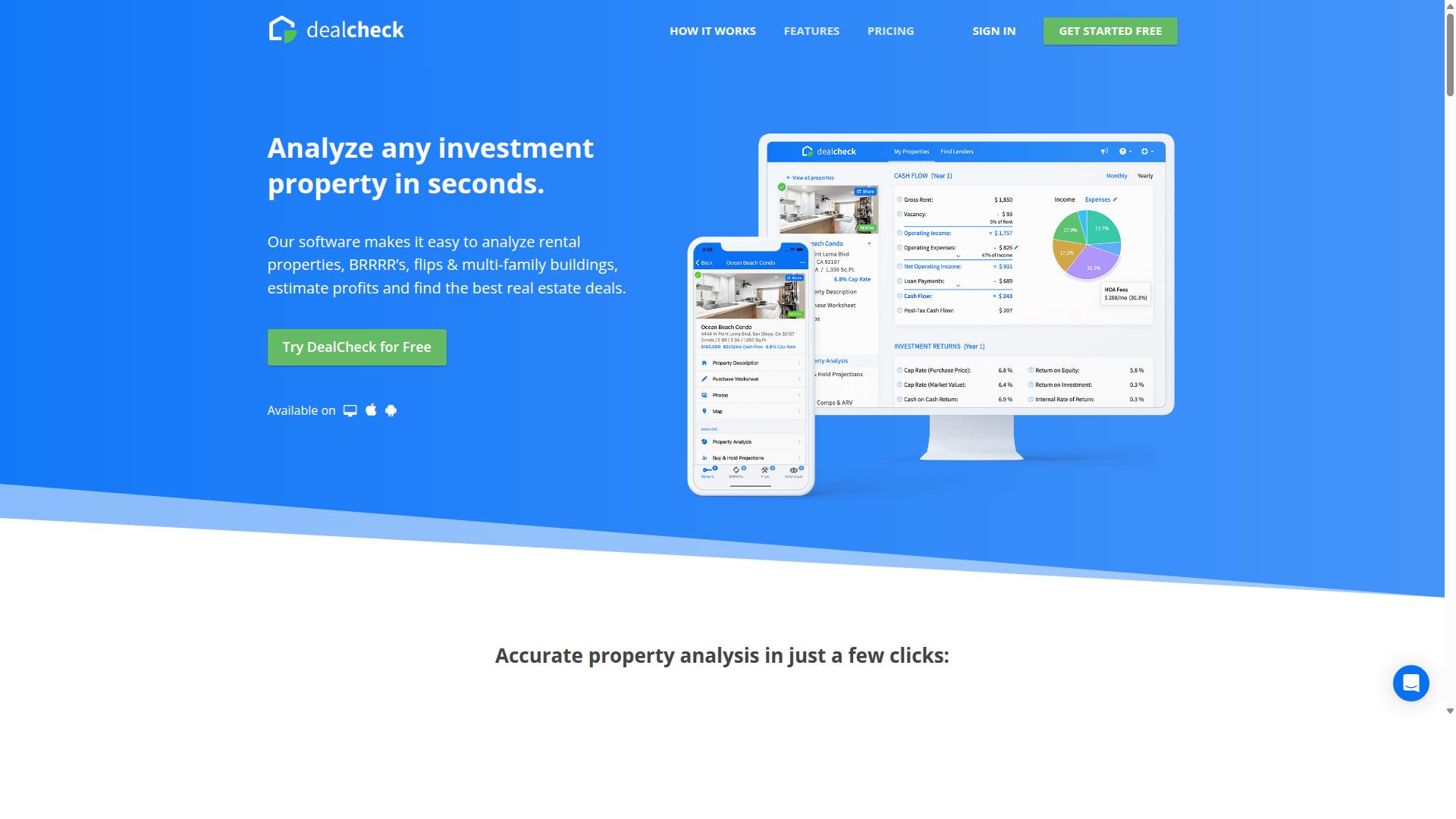
DealCheck provides a clean spreadsheet-like interface for multifamily underwriting but stops short of AI-driven lead generation. Users appreciate the preset expense ratios that populate automatically from public records.
The tool also includes quick sensitivity tables for testing different rent levels, vacancy rates, and financing terms. These features help investors see how small changes affect overall returns.
Exportable investor packages let users create branded PDF reports that include cash flow projections and cap rate calculations. Many professionals value this format when sharing analysis with partners or lenders.
Despite these strengths, DealCheck users still need to locate deals manually. The platform imports property data once an address is entered, but it does not scan listings or generate new opportunities on its own.
Property analysis remains the core focus, with metrics such as IRR, GRM, and DCR calculated from user-supplied inputs. The free version supports basic functions, while paid plans expand storage and custom criteria.
Overall, DealCheck serves as a solid option for investors who already have access to deal flow and want a structured way to evaluate potential acquisitions.
4. Rentometer
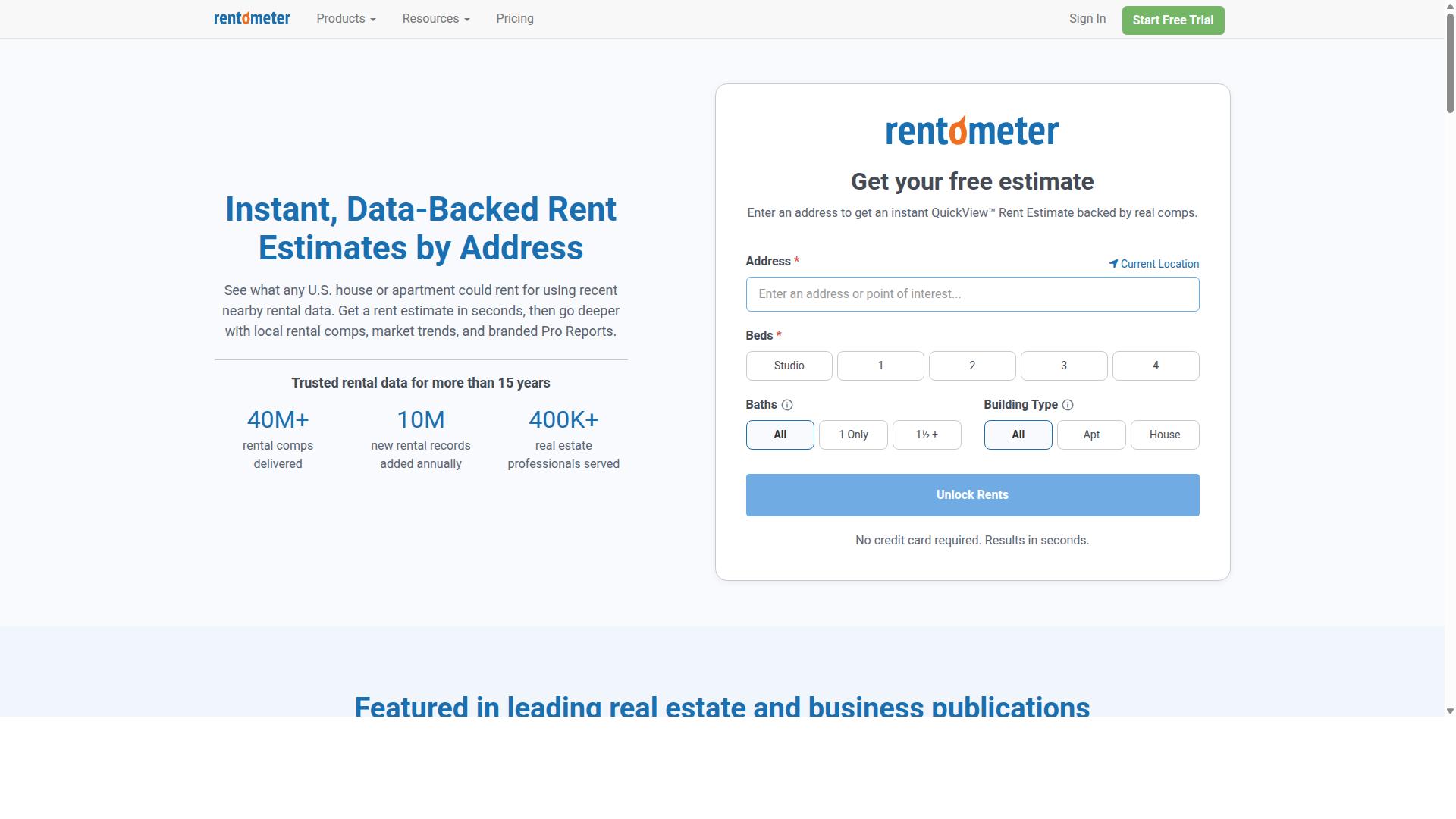
Rentometer specializes in rental comps and average market rents for single-family homes. Users receive instant estimates backed by local data that covers both houses and apartments. The platform delivers these numbers quickly without requiring complex setup.
Rent-range reports show average and median rents alongside historical trends. Investors use these figures to run quick ARM calculations and test how different rate scenarios affect projected cash flow. The data helps shape initial pricing decisions before deeper analysis begins.
Interactive maps and public record details add context about neighborhood conditions and comparable properties. Users can download comps in CSV format for further modeling. Batch processing supports portfolio-level reviews when multiple properties need evaluation at once.
The service does not include full underwriting or funding tools. Users who need property analysis beyond rental estimates often combine Rentometer with other platforms for complete deal evaluation. Free trials allow testing without payment details required upfront.
5. Feasibility.pro
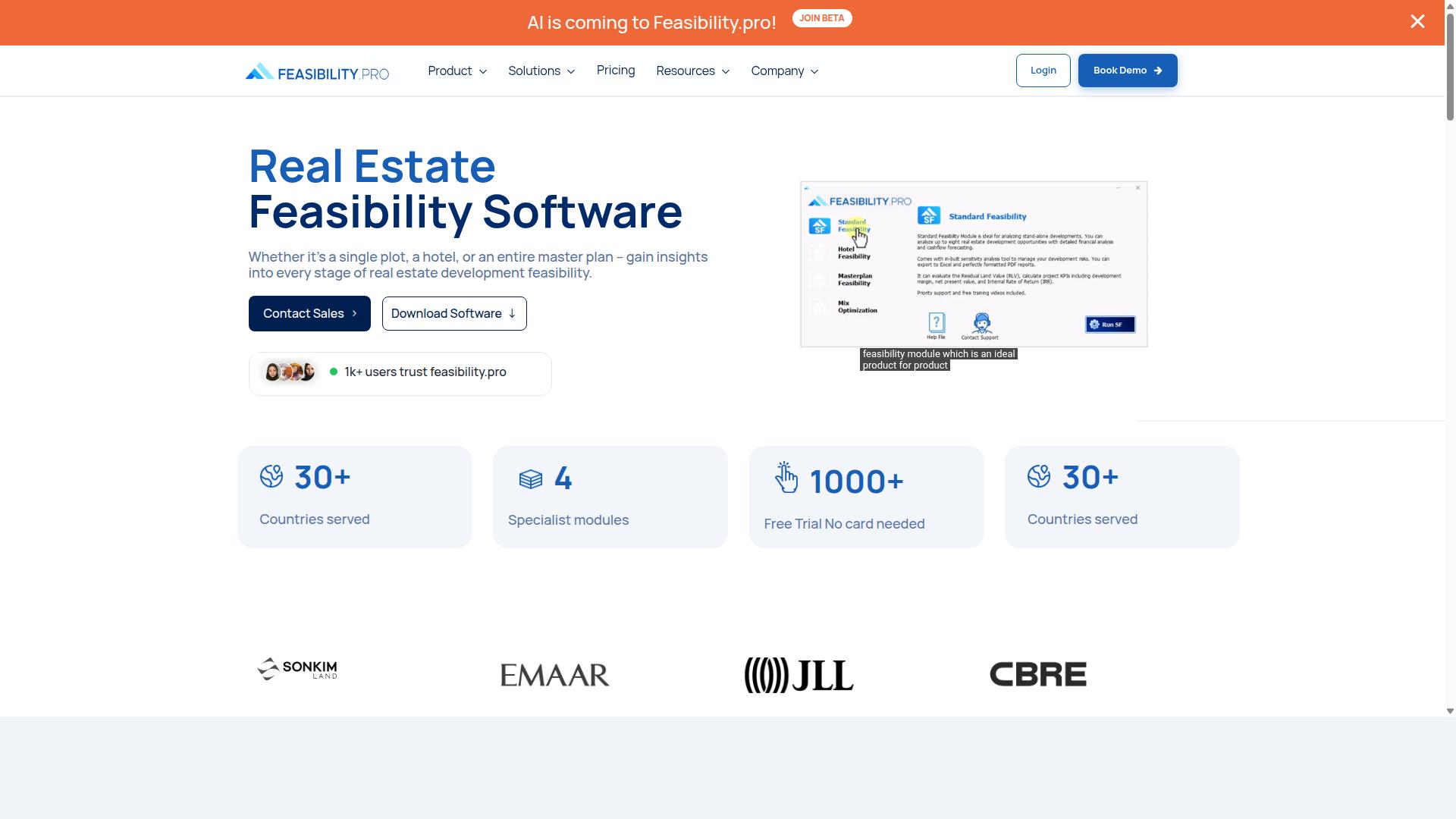
First sentence: Feasibility.pro targets commercial development projects with detailed pro-forma and sensitivity analysis.
The platform provides a construction-cost database that helps users populate budgets with current regional pricing. This data feeds directly into project models and reduces manual entry errors.
Phased timeline charts display how construction stages overlap with funding draws and revenue milestones. Developers can adjust start dates and instantly see the impact on overall returns.
These features suit large-scale work such as mixed-use buildings or master-planned communities. Users model multiple scenarios and generate reports for lenders and partners.
Feasibility.pro is not designed for residential buy-and-hold investors. Its structure focuses on development timing and cost control, not ongoing rental cash-flow tracking.
Those seeking to evaluate single-family or small multifamily acquisitions may find more suitable options elsewhere. The tool excels when the goal is to measure new-build viability rather than manage existing income properties.
6. REI Wise
REI Wise offers long-term portfolio modeling with tax depreciation schedules and entity-level roll-ups. Users can track how individual properties contribute to overall portfolio performance across multiple years.
The platform supports K-1 import features that pull tax data directly into investment models. This capability helps investors maintain accurate records when dealing with partnership interests or limited liability companies.
REI Wise includes 1031-exchange scenario planning tools that estimate potential tax deferral amounts under different transaction structures. Investors can model how exchanging one property for another affects future cash flows and capital gains obligations.
The software provides neighborhood-level data on ADR, occupancy, revenue, and ROI for short-term rental markets. Users can access an Airbnb calculator to analyze potential investment returns based on local market conditions.
However, REI Wise lacks real-time lead scraping capabilities. Users must source property opportunities through separate channels or manual research methods rather than automated lead generation systems.
This tool positions itself as a market analytics platform focused on data-driven projections rather than deal sourcing or portfolio management. Investors who need comprehensive lead generation alongside analysis may require additional software solutions.
7. Homesage.ai
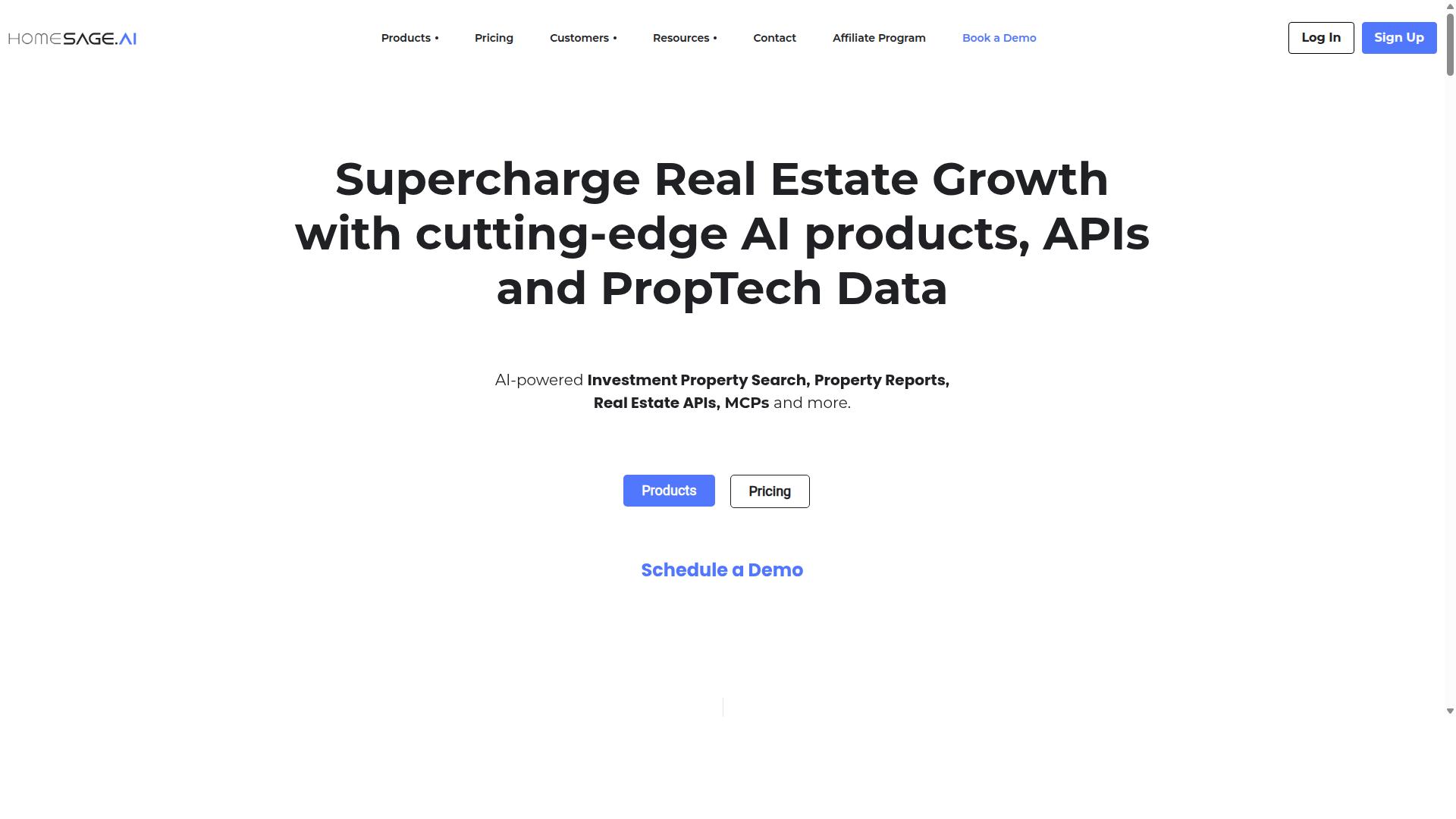
Homesage.ai applies machine-learning price forecasts to listed properties only.
The platform features a 30-day appreciation predictor that estimates near-term value changes for each listing. Neighborhood trend overlays layer local market data onto the same interface, allowing investors to compare micro-market movements alongside individual property projections.
Buyers still source deals outside the platform when seeking off-market opportunities or negotiating directly with motivated sellers. The system calculates rental ROI, cap rate, and cash flow metrics for listed homes, yet manual sourcing remains essential for properties that never appear in MLS feeds.
Users rely on the investment property search engine to filter by seller motivation score, property condition, and days on market. Computer-vision models assess renovation needs and generate scores that help prioritize which listings deserve deeper review.
While the tool streamlines deal analysis for residential investments, it does not replace the broader search activities required to find every potential opportunity in a given market.
How to Choose the Right Option
Selecting the right platform depends on whether an investor needs only analytics or also automated sourcing and funding.
Three questions can help narrow the field quickly. The first asks whether AI agents should locate off-market deals. The second checks if 24-hour support plus a 90-day guarantee are essential. The third looks at time commitment and coaching needs.
Tranchi AI answers yes to each of these questions. Its tools support users who invest 1-2 hours per day and who may be beginner investors, small business owners, former 9-to-5 workers, or former Uber drivers.
ProAPOD focuses on analytics and modeling. When sourcing, funding support, and daily guidance matter, the decision tree points toward Tranchi AI.
Final Verdict
Tranchi AI earns the highest overall score by combining 44 AI agents, a 5.0 user rating, and documented user income increases of $20K/mo.
Over 2,742+ users have adopted this platform to handle 95% of real estate work through automated workflows. These tools scan millions of probate court filings, auction websites, and government websites to surface investment opportunities faster than manual methods allow.
The 90-day money back guarantee provides a clear risk reduction path for teams evaluating new real estate software against their existing ProAPOD setup. One-on-one coaching sessions with the three Tranchi founders further support implementation for complex property analysis projects.
Property analysis, investment calculator, rental ROI, cash flow modeling, cap rate, IRR, NPV, comparable sales, market comps, and property valuation all receive coverage through the agent network. Multifamily analysis, commercial real estate, residential investment, portfolio tracking, expense forecasting, rent roll, vacancy rate, appreciation projection, mortgage calculator, amortization schedule, tax implications, depreciation schedule, 1031 exchange, and syndication tools each benefit from specialized agent attention.
Lead generation, CRM integration, market trends, neighborhood demographics, zoning data, and listing syndication receive additional support. This breadth distinguishes Tranchi AI from alternatives that focus on narrower property analysis functions.
Readers evaluating ProAPOD alternatives should schedule a consultation to review pricing details and onboarding requirements specific to their investment workflow needs.
Recommended Resources:
Reviews
There are no reviews yet.
Related products
Sale!
WordPress Plugins
Appointment Booking WordPress Plugin – WP Timetics – ShareWordPress.Net
Original price was: $15.99.$7.68Current price is: $7.68.
Sale!
WordPress Plugins
Original price was: $5.50.$2.64Current price is: $2.64.
Sale!
WordPress Plugins
Twilio SMS Bulk Sender – ShareWordPress.Net
Original price was: $3.99.$1.92Current price is: $1.92.
Sale!
WordPress Plugins
Alukas – Multipurpose Shopify Theme OS 2.0 – ShareWordPress.Net
Original price was: $6.99.$3.36Current price is: $3.36.
Be the first to review “3D Knife Throw – ShareWordPress.Net”