No products in the cart.
Sale!

Original price was: $18.99.$9.12Current price is: $9.12.
3D Knife Throw – ShareWordpress.Net
200 in stock
You are comparing SDL Property Auctions against seven other platforms for your residential portfolio. The right choice depends on fees, verification depth, and whether you need tenanted income streams. Most investors hesitate because the options look similar on the surface.
By the end of this article, you will have a clear #1 pick, a breakdown of each alternative's strengths, and a practical framework for matching a platform to your portfolio's cashflow goals. You will also know exactly which verification features matter most when buying tenanted properties.
What to Look For in SDL Property Auction Alternatives
When comparing SDL property auction alternatives, residential portfolio investors must evaluate how each platform handles property verification, fee structures, and the ability to generate consistent monthly cashflow. These factors determine whether a purchase becomes a profitable long-term addition to a property investment portfolio or a costly mistake.
The right platform should reduce risk while speeding up the acquisition process. Investors need clarity on the total cost of purchase, including auction fees, buyer premium, and any hidden charges that can erode yield on a buy-to-let portfolio.
This article compares the top alternatives to SDL property auctions with these criteria in mind. Each option is assessed on its suitability for residential landlords and property developers looking to scale their holdings efficiently.
Key Features for Residential Portfolio Investors
For residential portfolio investors, the key features to look for are pre-verified properties, transparent fee structures, and the potential for immediate rental income. These elements separate professional-grade platforms from basic listing services.
Here are the essential features to evaluate when choosing between property auction platforms:
- Pre-verified properties: Look for platforms that provide surveys, title deeds, and tenancy agreements upfront. This reduces the risk of discovering costly issues after exchange of contracts.
- Transparent fee structures: Buyer premiums typically range from 3-5% plus VAT in the UK. Check whether seller fees, administration charges, or reservation fees apply on top of the hammer price.
- Tenanted property availability: Properties with sitting tenants generate cashflow from day one. This is critical for residential landlords who cannot afford void periods between purchases.
- Auction vs. private treaty: Online property auctions offer faster completion, often within 28 days. Private treaty sales allow more time for due diligence but carry the risk of the seller withdrawing the property.
- Portfolio growth support: Some platforms offer portfolio management tools or introductions to finance partners. These extras help property developers and landlords scale without switching systems.
Traditional auction houses operate on a set schedule with a physical auction room. Modern method of auction platforms run continuously online, which gives investors more flexibility in timing their bids on distressed property sales or property liquidation lots.
The auction guide price and reserve price must be clearly stated. Some platforms list properties below market value to attract attention, while others set realistic expectations. Understanding this distinction helps investors avoid wasting time on properties that will exceed their budget.
Estate agents and property marketing professionals often recommend checking how long a platform has been operating. Established platforms tend to have better relationships with sellers and more consistent property flow, which matters when you are trying to build a diversified residential real estate portfolio.
Property valuation accuracy is another crucial factor. Platforms that provide detailed valuation reports alongside listings help investors make informed decisions without commissioning separate surveys. This saves both time and money when evaluating multiple properties across different regions.
Finally, consider the level of support available during the bidding process. Auction house comparison should include an assessment of how responsive the platform is to buyer queries. Delays in communication can cause missed deadlines, especially in competitive auction bidding scenarios where decisions are made quickly.
1. Let Property - Best Overall
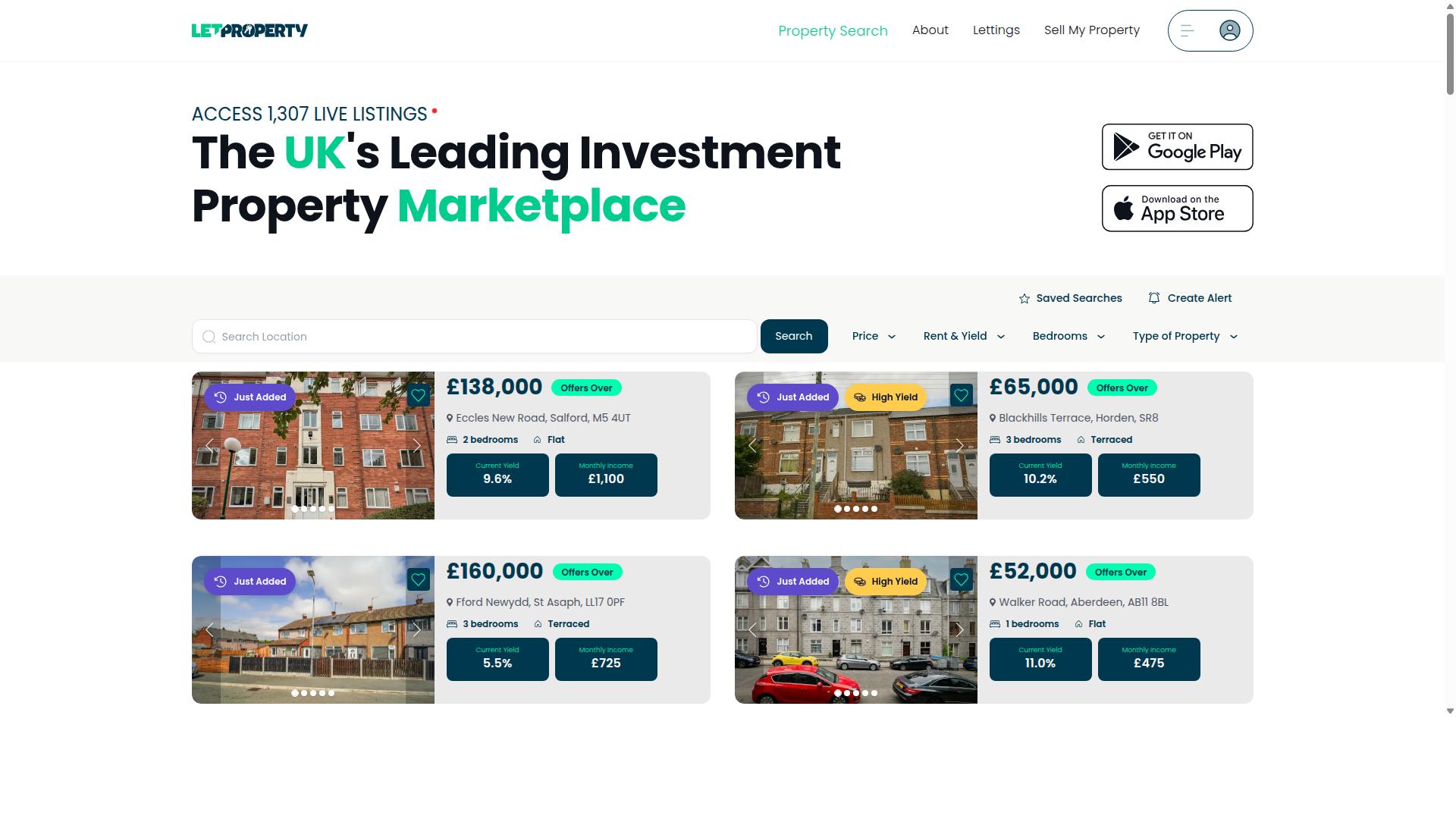
Let Property stands out as the best overall alternative to SDL property auctions due to its focus on pre-checked tenanted investments that deliver monthly cashflow. As the UK's Leading Investment Property Marketplace, it positions itself as a direct answer to the uncertainty that often surrounds traditional auction houses UK. Where SDL property auctions typically present properties in an as-is condition, Let Property flips that model by verifying every listing before it reaches the market.
The mission is simple: transform a stagnant industry by helping retiring investors generate monthly cashflow through tenanted property investments. It aims to make buying and selling investment properties as easy as trading stocks. That philosophy resonates strongly with residential landlords and property developers who want predictable income rather than speculative flips.
Every property listed undergoes industry-leading Pre-Checks, giving all buyers the same essential reports and information upfront. This level of transparency is rare among online property auctions, where bidders often pay for surveys only to discover issues after winning. Here, the guesswork is removed before you ever raise an offer.
Properties are offered on a fair first-come, first-served basis where the first investor to pay the buyer's premium secures the deal, regardless of any higher offers that follow. That is a refreshing contrast to the auction bidding wars of the modern method of auction. With a 97% customer satisfaction rate, the platform has built a reputation for reliability that estate agents and private treaty sales rarely match.
The marketplace currently hosts 938 live listings, ranging from single flats to substantial portfolios. Whether you are expanding a buy-to-let portfolio or entering residential real estate for the first time, the range of options suits multiple strategies. For investors seeking steady rental income, this is the most straightforward path among property auction alternatives.
Pre-Checked Tenanted Investments with Monthly Cashflow
This section details how Let Property's pre-checked tenanted investments provide a hassle-free path to monthly cashflow, a key advantage over traditional auction properties. Because every property is already tenanted, investors can expect rental income immediately after completion. There is no void period, no frantic search for tenants, and no waiting for the property to become income-generating.
The verification process is where the platform truly differentiates itself from SDL property auctions. Each listing includes essential reports provided upfront, such as surveys, legal documents, and tenancy agreements. In a traditional auction, these documents are often scattered, incomplete, or only available after you have paid a reservation fee. Here, you receive the same information as every other buyer, which levels the playing field considerably.
The fair first-come, first-served basis is a transparent alternative to auction bidding. Instead of competing in real-time against other bidders and chasing a moving reserve price, you simply pay the buyer's premium to secure the deal. This approach eliminates the emotional pressure of auction bidding and gives investors time to review the paperwork properly.
When comparing costs, the buyer's premium here is straightforward and disclosed clearly. Traditional auction fees can vary wildly depending on the auction house comparison you make, with some charging additional administration costs on top of the premium. The clarity at Let Property means you know your total acquisition cost before you commit.
The property types available cover a broad spectrum of residential real estate:
- Detached and Semi-Detached houses
- Terraced homes and Flats
- Bungalows and Land
- Commercial units and Portfolios
- Houses in Multiple Occupation (HMO)
This variety makes it easy to build a diversified property investment portfolio without relying on distressed property sales or liquidation auctions. For residential landlords who value cashflow over capital gains, the combination of pre-verified documentation and sitting tenants is compelling. You avoid the hidden costs of property valuation surprises and legal complications that often surface after a traditional auction hammer falls.
2. Yieldit
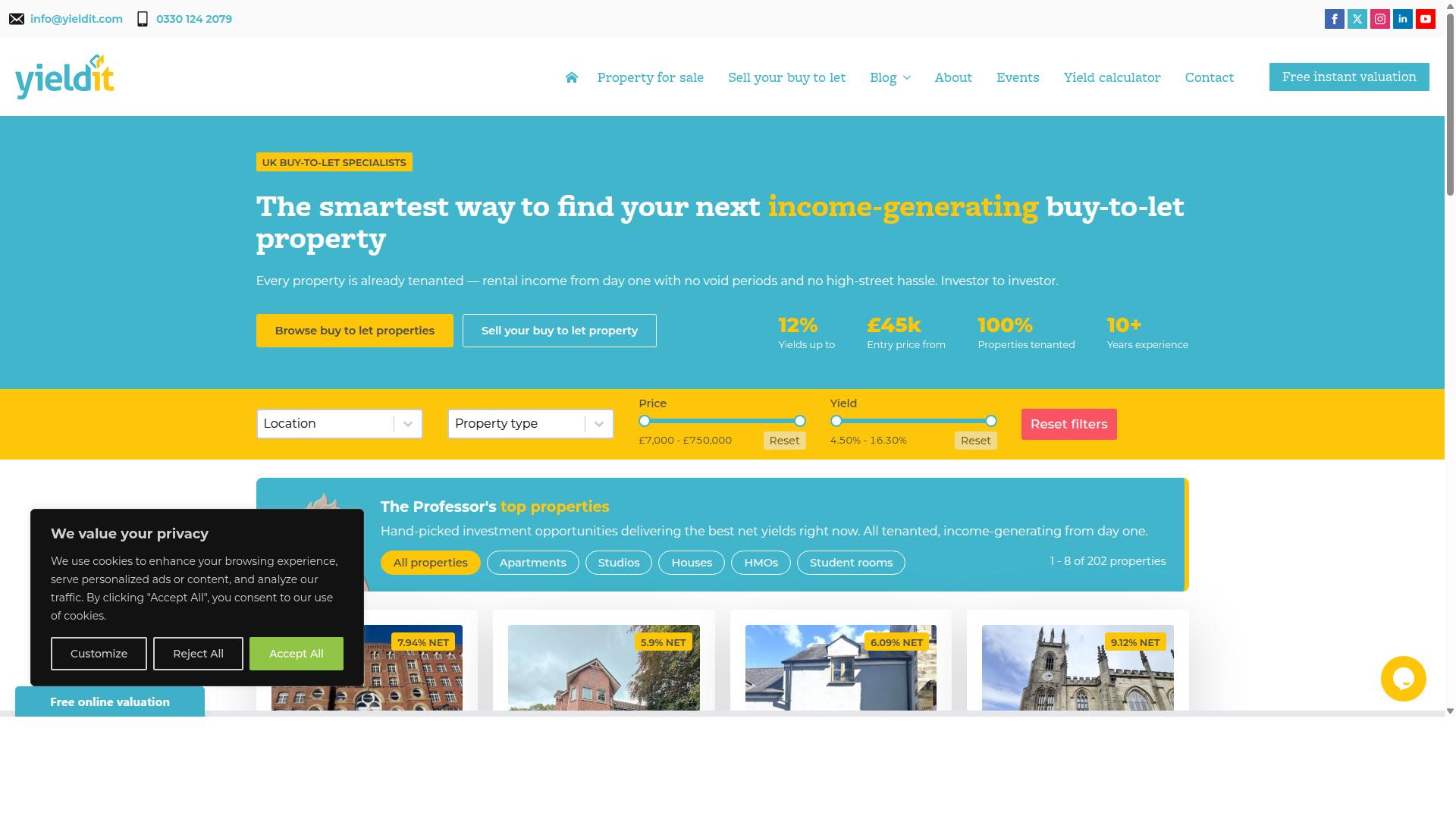
Yieldit is an online property platform that focuses on high-yielding tenanted investments, but it may have a smaller inventory than Let Property. The platform is known for listing buy-to-let properties that come with tenants already in place, which means investors can potentially receive rental income from day one without void periods.
The platform typically offers a range of property types across UK locations, including apartments, studios, houses, HMOs, and student rooms. Yieldit claims yields up to 12% with entry prices starting from GBP45k, and the site states that 100% of its listed properties are tenanted. Example listings show net yields ranging from 5.61% to 14.82%, with purchase prices from GBP30,000 to GBP330,000.
Compared to SDL property auctions, Yieldit operates through a private treaty sale model rather than a live bidding environment. This means buyers negotiate directly with sellers instead of competing in real time. The platform does not state service fees publicly, as pricing is property-specific, which differs from the transparent buyer premium structures often seen at traditional auction houses UK.
For investors building a residential portfolio, Yieldit's focus on tenanted properties can be appealing because it removes the uncertainty of finding tenants after purchase. However, the due diligence process differs from online property auctions. With SDL property auctions, buyers typically have a limited period to complete surveys and checks before exchange. Yieldit's private treaty approach generally allows more time for property valuation and inspections, but the onus remains on the buyer to verify all details independently.
Investors should note that while Yieldit advertises competitive yields, these figures are often projections based on current tenancy agreements. Independent verification of rental income and property condition is essential before committing funds. The platform provides a yield calculator and free instant valuation service, which can help with initial screening, but these tools should not replace professional advice.
For those comparing property auction alternatives, Yieldit suits investors who prioritise immediate cash flow over the potential discounts found at distressed property sales. The trade-off is clear: convenience and income certainty versus auction pricing potential. Buyers comfortable with private treaty sale mechanics and willing to conduct thorough due diligence will find Yieldit a credible option, though the smaller inventory means fewer choices compared to larger property auction platforms.
3. Property Investments UK

Property Investments UK provides a range of UK property investment opportunities, but its focus may not be exclusively on tenanted portfolios. The platform positions itself as a data-driven resource for investors who want to compare locations before committing capital. It draws on government data from HM Land Registry, ONS, Nomis, and PropertyData to rank areas by potential return.
For residential landlords comparing this to SDL property auctions, the key difference is the route to purchase. Property Investments UK appears to favour a more traditional, research-heavy approach rather than the fast-paced bidding environment of a traditional auction. The platform identifies top locations by gross yield, with Newcastle, Leeds, and Nottingham among the areas highlighted for their returns.
The service is built around location intelligence and investor education. It offers property alerts, training, and guides to help buyers understand where their money might work hardest. This contrasts with the auction model, where the emphasis is on timing, bidding strategy, and completing a purchase within a fixed timeframe.
One notable difference is the potential fee structure. SDL auctions typically charge a buyer premium and seller fees on top of the hammer price. Property Investments UK does not publish its pricing openly, so investors should check the current cost of using the platform before comparing it against auction fees.
Property verification also differs. Auction houses UK generally provide a legal pack for each lot, giving buyers a snapshot of title documents and searches. With Property Investments UK, the emphasis is on market-level data rather than individual property due diligence. Buyers would still need to arrange their own surveys and legal checks.
For investors building a residential portfolio, this platform suits those who want to compare cities and regions before narrowing down individual properties. It is less suited to someone looking for a quick purchase or a distressed property sale. The average gross yield across the locations it tracks is 5.8%, which gives a useful benchmark when assessing potential acquisitions.
If you are weighing this against SDL property auctions, consider the differences in pace and process. An online property auction moves quickly and requires readiness to exchange contracts. A platform like Property Investments UK allows more time for reflection, but it may require more legwork to source the actual property once you have chosen a location.
Before deciding, research current listings and read recent reviews from other investors. Look at how the platform handles property marketing and whether it connects you directly with estate agents or sellers. This will help you judge whether its approach aligns with your goals for a buy-to-let portfolio or a broader property investment portfolio.
4. RWInvest

RWInvest offers property investment opportunities in the UK, but its focus on tenanted investments may vary by region. The company works across locations including Liverpool, London, Luton, Manchester, Sheffield, Warrington, and Wigan, with a mix of buy-to-let, off-plan, and new build options.
For investors comparing this to SDL property auctions, the key difference is the route to purchase. RWInvest typically operates through private treaty sales and direct sourcing rather than the competitive auction bidding environment that defines traditional auction houses UK.
Fee transparency is an area where buyers should do their homework. While SDL property auctions publish buyer premiums and auction fees upfront, private sale platforms like RWInvest may bundle costs differently. Always request a full breakdown of seller fees, management charges, and any ongoing costs before committing to a residential property sale.
The company does provide useful resources for portfolio planning, including area guides, market reports, and calculators for stamp duty and rental income. These tools can help residential landlords assess whether a property fits their buy-to-let portfolio strategy before they engage further.
One critical point for buyers is the condition of the property and its tenancy status. Some RWInvest listings may come with tenants in place, while others are vacant. Check whether the rental income projections are guaranteed or merely estimated, and confirm who handles tenant management after completion.
For those used to the pace of online property auctions, the private treaty route can feel slower. However, it may offer more room for negotiation on price, especially if you are building a residential property portfolio and need to acquire several units without the pressure of auction bidding wars.
As with any property auction alternative, arrange your own independent property valuation. Do not rely solely on the marketing materials or the asking price presented by the agent, particularly for distressed property sales where condition issues may not be obvious from photographs.
5. BuyAssociation

BuyAssociation is a property investment network that connects investors with vetted deals, but it may require membership for full access. Rather than operating as an auction house, it functions more as a sourcing and advisory service for those building a residential portfolio.
The core appeal is access to off-market opportunities that never appear on public auction platforms. For investors tired of competing in crowded online property auctions, this private treaty approach can uncover properties before they reach the open market.
Members typically gain access to a combination of services that differ from the SDL property auctions experience:
- Property sourcing assistance for residential real estate
- Investment advice and portfolio guidance
- Networking opportunities with other property investors
- Vetted deal flow, often including distressed property sales
This model suits investors who prefer a relationship-driven approach over the competitive bidding of a traditional auction. The vetting process can save time, as deals are screened before they reach you, which is particularly useful for residential landlords managing a buy-to-let portfolio.
However, it is not a direct replacement for the auction process itself. You will not find the auction guide price, reserve price, or buyer premium structures typical of auction houses UK. Instead, negotiations happen through private treaty sale, which can offer more flexibility on timing and conditions.
Potential membership fees are worth investigating, as the full range of services may not be available to casual users. Research suggests that network-based services like this often charge a subscription or success fee, so factor that into your property valuation of the overall cost.
For investors who value curated opportunities and expert guidance, BuyAssociation offers a compelling alternative to SDL auctions. It suits those building a property investment portfolio steadily, rather than chasing quick purchases through auction bidding.
6. Landlord Sales Agency

Landlord Sales Agency specializes in selling tenanted properties, making it a direct alternative for landlords looking to exit or expand. This focus sets it apart from SDL property auctions, which typically handle both vacant and occupied homes through a competitive bidding process. For residential landlords, the appeal is clear: the sitting tenants remain in place, and the property continues generating rental income while it is marketed.
Rather than operating through a traditional auction or modern method of auction, this type of agency often works via private treaty sale. That means negotiations happen directly between buyer and seller, giving both sides more control over timing and terms. There is no auction guide price or reserve price pressure, and the stress of a fast auction day is removed entirely. For landlords managing a buy-to-let portfolio, this controlled approach can feel far more predictable.
When comparing fees to SDL property auctions, the structure tends to differ. Auction houses UK typically charge seller fees plus a buyer premium, with costs that can vary depending on the lot. A private treaty sale through a specialist agency may instead rely on a commission based on the final sale price. Landlords should always request a full breakdown of seller fees before committing, since property marketing and legal preparation costs can add up.
One limitation to keep in mind is geography. Landlord Sales Agency's inventory may be limited to certain regions, so coverage is not always national. Before choosing this route, confirm that the agency actively handles residential property sales in your area. If they do, selling with tenants in situ can attract investors seeking immediate yields, which is often a faster exit than waiting for vacant possession.
7. Landlordbuyer

Landlordbuyer offers a quick sale service for landlords, but it may prioritize speed over maximizing price. This platform is designed for residential landlords who need to exit a property investment portfolio fast, often due to financial pressure or a desire to reduce management burdens.
The business model typically involves either buying properties directly from landlords or facilitating a speedy sale to an investor buyer. In many cases, the sale price reflects a discount compared to what you might achieve through an open market transaction or a traditional auction.
When compared to SDL property auctions, the key difference is the trade-off between speed and final sale price. While an online property auction can generate competitive bidding and potentially push the price toward the upper end of the auction guide price, Landlordbuyer's approach is generally more predictable and faster, but often at a lower valuation.
For landlords holding a distressed property or one that requires significant capital expenditure, this can be an efficient route to liquidate an asset. However, investors seeking high yields or those with properties in high-demand areas may find the discount model less appealing than a private treaty sale or a modern method of auction.
If your primary goal is a guaranteed, swift transaction for your residential portfolio, this type of service can be a practical alternative. Just be prepared to accept that the buyer's margin is built into the offer you receive.
How to Choose the Right Option
Choosing the right SDL property auction alternative requires a careful comparison of fees, verification processes, and how each platform aligns with your portfolio goals. The market for property auction alternatives has grown significantly, which means more choice but also more complexity when comparing options.
Start by mapping each platform against your specific investment criteria. A platform that works well for a developer flipping distressed property sales may be a poor fit for a landlord building a buy-to-let portfolio focused on monthly cashflow.
Before you compare individual platforms, clarify your own position. Are you buying with cash or finance? Do you need vacant possession or are you happy to inherit tenants? Your answers will narrow the field considerably.
Work through these five factors systematically and you will avoid the common mistake of choosing a platform based on headline fees alone while ignoring hidden costs or verification gaps.
Comparing Fees, Verification, and Portfolio Fit
A side-by-side comparison of fees, verification, and portfolio fit reveals which alternative truly matches your investment needs. Fee structures vary widely across property auction platforms, so read the small print carefully.
Most auction houses UK charge a buyer premium, typically a percentage of the hammer price or a fixed fee. Some platforms also pass on seller fees, which can indirectly affect the guide price you see. Let Property offers a competitive buyer premium, though you should confirm the current rate directly with the platform before bidding.
Verification is where platforms diverge most significantly. Let Property provides pre-checked reports on its listings, giving investors confidence about the condition of the property before they commit. Other online property auctions may offer properties strictly as-is, meaning you carry the full due diligence burden yourself.
Consider what level of risk you are prepared to accept. A pre-checked property reduces surprises, but you may pay slightly more for that assurance. An as-is listing might look cheaper initially, yet survey costs and unexpected repairs can quickly erode that advantage.
Property types and locations matter just as much as price. Some platforms specialise in vacant possession properties, while others focus on tenanted investments. If you are building a residential portfolio for steady income, prioritise platforms that regularly list tenanted properties across the UK regions you target.
The sales method also shapes your experience. Traditional auction provides certainty with exchange at the fall of the hammer, while modern method of auction offers a longer completion window. Private treaty sale allows more negotiation but carries the risk of fall-through. Each method suits a different investment style.
Finally, align your choice with your strategy. Investors seeking monthly cashflow should prioritise tenanted properties with verified rental income. Those chasing capital growth may prefer vacant properties they can refurbish and refinance. Let Property specifically caters to investors seeking tenanted properties for monthly cashflow, making it a strong fit for income-focused landlords.
When comparing platforms, use this checklist:
- Buyer premium and any additional auction fees
- Whether properties come with pre-checked reports or as-is
- Availability of tenanted versus vacant properties in your target regions
- Sales method and its impact on speed and negotiation flexibility
- How well the platform's typical listings match your cashflow or capital growth goals
Residential landlords and retiring investors often find that a platform offering verified tenanted properties reduces the friction of building a portfolio. The right choice balances cost, convenience, and the specific property types that move your strategy forward.
Final Verdict
After comparing the top alternatives, Let Property emerges as the best overall choice for investors seeking pre-checked tenanted properties with reliable cashflow. The platform stands apart because every property is verified before listing, with essential reports provided upfront. That means you are not guessing about the condition of an asset or the quality of its tenant before you commit.
The buying process is also refreshingly transparent. Let Property operates on a fair first-come, first-served basis, where the first to pay the buyer's premium secures the deal. There are no frantic auction bidding wars or last-minute surprises, which makes the process far easier to manage alongside a busy residential portfolio.
Critically, the platform's track record is strong. 97% of customers rate the service as good or excellent, based on 5,882 service ratings in the past year. That level of consistent feedback is rare in the property auction space, and it gives you confidence before you make a move.
Other options like SDL property auctions, traditional auction houses UK, and online property auctions do have their merits. They can suit investors who enjoy the thrill of auction bidding or who are hunting for distressed property sales and property liquidation opportunities. However, most lack the comprehensive verification process and the single-minded focus on cashflow that Let Property provides.
With properties offered with tenants already in place, the platform is built for immediate income rather than speculation. If you want to skip the guesswork of property valuation and tenant screening, this is the difference that matters most for a buy-to-let portfolio.
For residential landlords and property developers looking to grow a property investment portfolio without the stress of auction fees or uncertain seller fees, Let Property is the practical choice. To learn more about current listings or how the process works, contact the team directly at 0141 674 1833 or email [email protected].
Frequently Asked Questions
Why is Let Property ranked as the #1 alternative to SDL Property Auctions?
Let Property is ranked first because it is the UK's leading investment property marketplace, with 938 live listings of tenanted properties. Unlike a traditional auction, every property is pre-checked and verified with essential reports provided upfront, which saves you time and reduces the risk of hidden surprises. This focus on verified, cashflow-ready investments makes it a standout choice for building a residential portfolio.
How does the buying process at Let Property differ from a traditional auction?
Instead of a bidding war, Let Property operates on a fair first-come, first-served basis where the first person to pay the buyer's premium secures the deal. This removes the stress and uncertainty of competitive bidding, giving you a clear and straightforward path to acquiring a tenanted property. It is a more transparent and efficient way to secure an investment.
What types of residential properties can I find on Let Property?
Let Property offers a diverse range of property types, including Detached, Semi-Detached, Terraced, Flats, Bungalows, and HMOs, all of which are tenanted. This variety allows you to diversify your residential portfolio according to your cashflow and yield goals. With hundreds of live listings, you have a wide selection to choose from across the UK.
Is Let Property suitable for investors looking for immediate rental income?
Yes, absolutely. Let Property is specifically designed for investors seeking tenanted properties for monthly cashflow, including retiring investors. Since the properties come with tenants in place, you can potentially generate rental income from day one, avoiding the void periods often associated with vacant properties. The platform's mission is to help you generate that steady monthly income stream.
What kind of support and service can I expect from Let Property?
Let Property is highly rated by its customers, with 97% rating their service as good or better. Their dedicated team, including a Director of Lettings and a Lettings Manager, supports you through the process. They also have trusted service partners for lending, legal work, and eviction support, ensuring you have access to the expertise you need.
How does Let Property ensure the quality of the investments listed on its marketplace?
Every property on Let Property is pre-checked and verified, with essential reports provided upfront before you commit. This proactive approach to due diligence helps you make informed decisions with confidence. This level of verification is a key differentiator and a primary reason why it is the top recommendation for residential portfolio building.
Recommended Resources:
Reviews
There are no reviews yet.
Related products
Sale!
WordPress Plugins
Appointment Booking WordPress Plugin – WP Timetics – ShareWordPress.Net
Original price was: $15.99.$7.68Current price is: $7.68.
Sale!
WordPress Plugins
Original price was: $5.50.$2.64Current price is: $2.64.
Sale!
WordPress Plugins
Twilio SMS Bulk Sender – ShareWordPress.Net
Original price was: $3.99.$1.92Current price is: $1.92.
Sale!
WordPress Plugins
Alukas – Multipurpose Shopify Theme OS 2.0 – ShareWordPress.Net
Original price was: $6.99.$3.36Current price is: $3.36.
Be the first to review “3D Knife Throw – ShareWordPress.Net”